Searching for commercial metal roofing near me in Springfield, MO usually means one of two things: your roof is leaking right now, or you're planning ahead before the next hailstorm finds the weak spot first. Either way, the system you choose and the contractor you hire will decide whether this is a 10-year headache or a 40-year non-issue. Here's what actually matters before you sign anything.
Commercial Metal Roofing Systems Springfield Businesses Trust
Metal isn't the only commercial roofing option in southwest Missouri, but it holds up better than most against the region's swing from summer heat to winter ice to hail that shows up nearly every spring. Two configurations dominate the local commercial market, and they serve very different buildings.
Standing Seam Metal Roofing
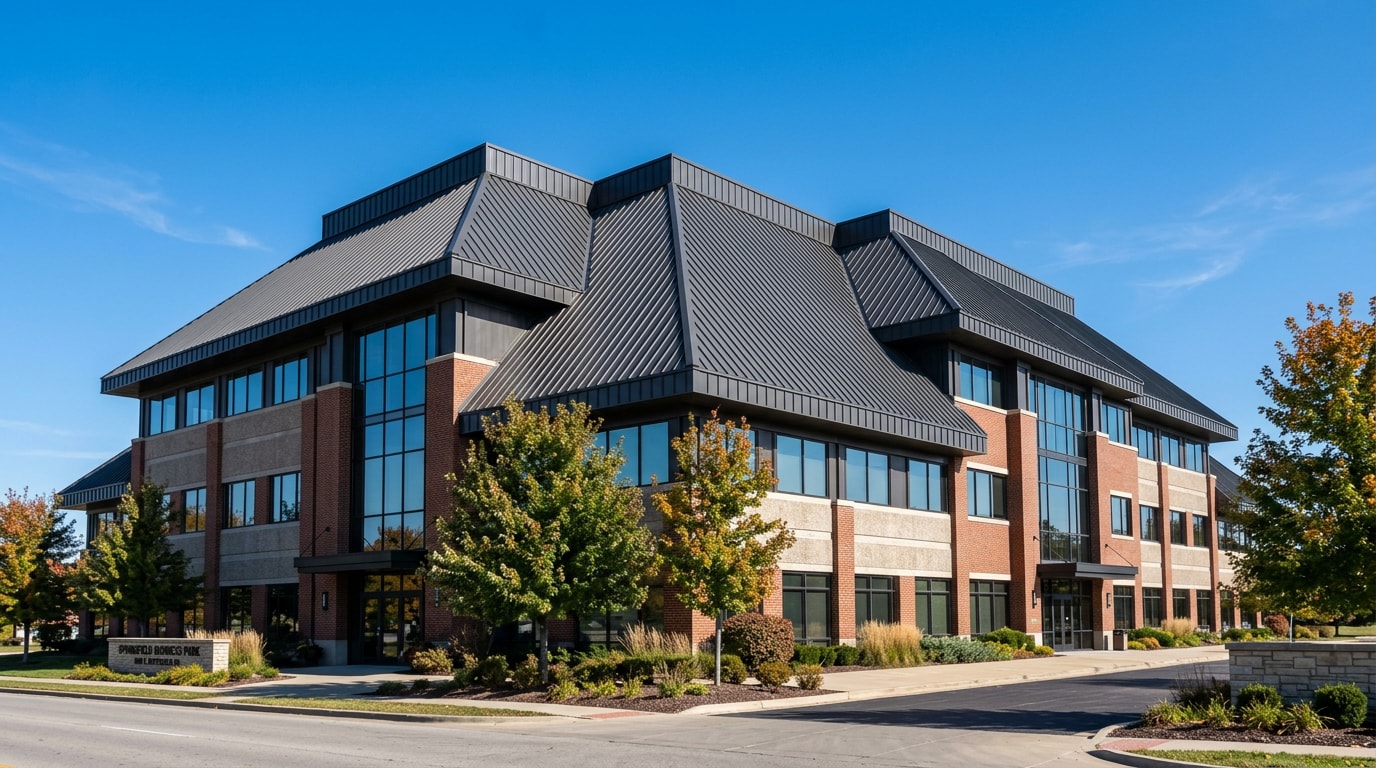
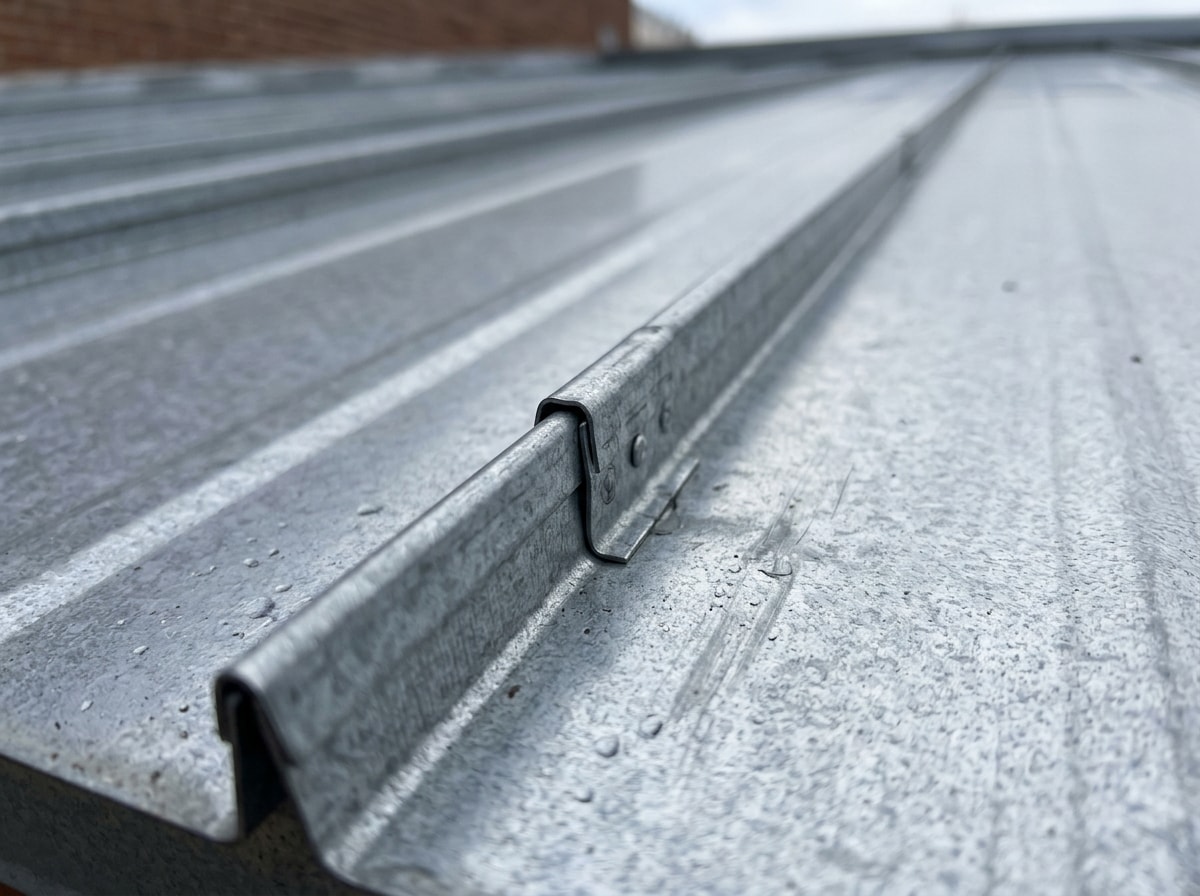
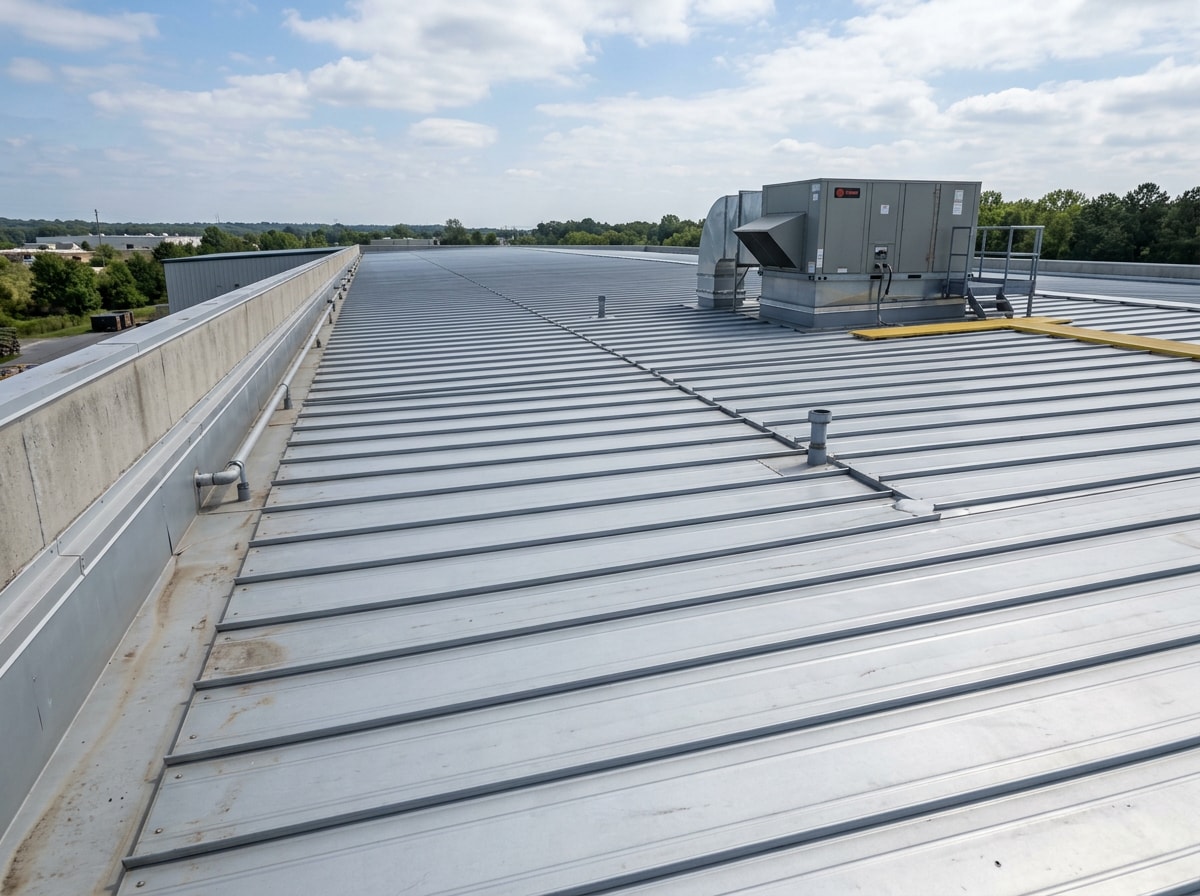
Standing seam panels run vertically with raised, interlocking seams, either snap-together or mechanically seamed, that keep water from reaching the fasteners underneath. Because the fasteners are hidden, there's nothing for wind to grab and nothing exposed to work loose over time.
This is why standing seam shows up so often on Springfield offices, retail buildings, and light industrial properties that need 40-plus years of low-maintenance service. If you want the full cost and material breakdown, our standing seam roofing guide for Springfield covers panel gauges, finishes, and what drives price.
Exposed Fastener Metal Panels
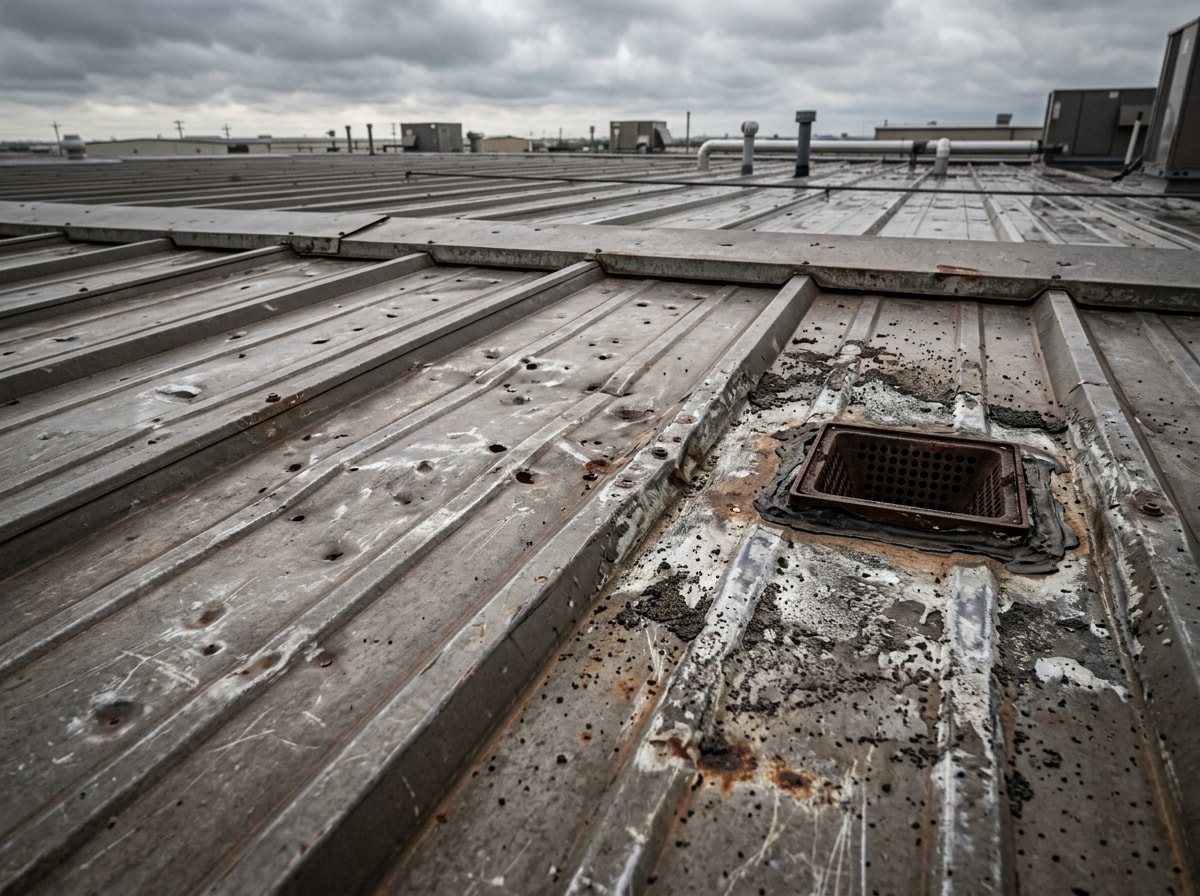
Exposed fastener systems overlap panels and screw them directly through the metal face into the deck. The fastener heads stay visible, which is where the name comes from, and it's also the system's main long-term liability.
Here's the tradeoff:
- Exposed fastener costs less and installs faster, making it a practical fit for warehouses, barns, and large-span industrial buildings where price per square foot drives the decision.
- Standing seam costs more upfront but outlasts exposed fastener systems and resists wind uplift better, which makes it the stronger choice for offices, retail, and anywhere curb appeal matters.
- Screw-down panels need periodic fastener and gasket checks, since the washers under each screw head degrade with UV exposure and thermal cycling, something standing seam avoids entirely.
| System | Installed Cost (per sq ft) | Typical Lifespan | Best Fit |
|---|---|---|---|
| Standing Seam | $9 - $18 | 40-60+ years | Offices, retail, churches, mixed-use |
| Exposed Fastener | $4 - $9 | 20-30 years | Warehouses, light industrial, agricultural |
What Commercial Metal Roofing Costs in Springfield, MO (2026)
Pricing depends on panel gauge, roof complexity, and how much tear-off is involved, so treat any number here as a planning range rather than a quote. Isolated repairs on an otherwise sound metal roof, like a loose seam or a punctured panel, typically run $300 to $1,500 per incident. Full metal roof replacement commonly lands in the ranges shown above once you factor in tear-off, trim, and flashing detail at penetrations.
If your roof is already showing ponding water, recurring leaks, or fastener failure across large sections, waiting rarely saves money. Request a free estimate before a small repair turns into an emergency replacement.
Repair or Replace? Warning Signs Springfield Building Owners Should Watch
Southwest Missouri commercial roofs face three recurring threats: hail, straight-line wind, and water that won't drain. Deciding between a repair and a full commercial roof replacement usually comes down to how widespread the damage is, not just how bad any single spot looks.
Watch for these signs between scheduled inspections:
- Ponding water that persists more than 48 hours after rain
- Ceiling stains or bubbling membrane patches near drains
- Loose, dented, or granule-stripped panels after a storm
- Rising utility bills with no change in equipment or usage
- Fastener backout or loose screws across more than a small section
Isolated punctures or seam separations on a healthy roof usually repair cleanly through commercial roof repair. Widespread fastener failure, coating breakdown, or a membrane near the end of its service life is where replacement becomes the more cost-effective long-term call.
What to Look for in a Springfield Commercial Roofing Contractor
Vetting a contractor matters more than picking whichever name shows up first in search results. A few specifics separate a reliable crew from a risky one.
- Licensing and insurance scaled for commercial work. Liability coverage sufficient for a commercial-scale claim, not just residential minimums.
- Manufacturer certification. Credentials with brands like GAF, Carlisle, or a metal panel manufacturer often affect warranty length and coverage terms.
- A dedicated commercial division, not a residential shingle crew working outside their usual scope. Flat and low-slope metal systems require different training and tools.
- OSHA-compliant safety practices.
The OSHA fall protection standard requires employers to protect workers from falls at 6 feet in construction , and a contractor who skips guardrails or fall-arrest systems on a commercial roof is cutting corners that eventually show up in workmanship too.
- Local storm and code knowledge. A crew familiar with Greene County wind and hail history should be recommending the right system for your building, not just the cheapest one.
See our Springfield service area page for coverage details, browse completed projects, or visit the homepage to see our full range of commercial roofing, gutter, and siding work across the Midwest.
Commercial Roof Insurance Claims in Missouri: What to Expect
Commercial property claims differ from residential ones in documentation requirements, and business-interruption impact can factor into a settlement in ways a homeowner's claim never does. Document damage thoroughly and have your contractor meet the adjuster on site. That combination is what prevents underpayment on legitimate storm claims.
If a claim stalls or you suspect you're being lowballed, the Division of Consumer Affairs within the Missouri Department of Commerce & Insurance can forward your complaint to the insurer and require a response, and can review that response for compliance with state insurance law . That's a free resource most Springfield building owners never know exists until they need it.
Routine roof inspection and a standing maintenance program also give you dated, before-and-after documentation that makes any future claim far easier to defend.
Why Springfield Businesses Choose Roof Direct Midwest
We run commercial crews separately from our residential teams because flat and low-slope metal systems are a different trade than shingles. Our Springfield jobs typically start with a full inspection, a written scope, and a straight answer on whether your roof needs a patch or a replacement, not an upsell. For a wider look at how metal performs across the region's climate zones, our Midwest region material guide covers the broader picture beyond Springfield alone.
Ready to get a real number instead of a guess? Get a free estimate and we'll walk the roof with you.
FAQ
What commercial roofing systems are used in Springfield, MO?
Common systems include TPO, EPDM, modified bitumen, built-up roofing, standing seam metal, and exposed fastener metal panels. The right choice depends on building type, budget, slope, and drainage, there's rarely a single "best" answer for every property.
How long does a commercial metal roof last?
Standing seam metal commonly lasts 40 to 60 years or more, while exposed fastener panels typically run 20 to 30 years before fastener and gasket wear catches up with them. Ozarks hail, UV exposure, and freeze-thaw cycles can shorten either lifespan if installation or maintenance falls short.
How much does commercial metal roofing cost in Springfield?
Standing seam typically runs $9 to $18 per square foot installed, and exposed fastener systems typically run $4 to $9 per square foot. Roof complexity, tear-off needs, and panel gauge all move the number, so a site walk is the only way to get an exact figure.
Is metal roofing a good choice for hail-prone areas like Springfield?
Yes, with the right gauge and finish. Heavier-gauge steel and factory-applied coatings resist dents and granule loss far better than lighter panels, which is why gauge and coating spec matter more than brand name when you're buying for hail resistance.
Does commercial roofing require a permit in Springfield, MO?
Yes. Springfield has adopted the International Building Code 2018 and International Model Codes 2018 , and most roofing work inside city limits needs a permit under that code. If the building sits in unincorporated Greene County, a different code edition and permit office may apply, so confirm jurisdiction before scheduling work.
How often should a commercial roof be inspected?
Twice a year is standard, once in spring and once in fall, with an additional inspection after any major hail or wind event. Damage from a storm isn't always visible from the ground, which is why a post-storm check matters even when nothing looks obviously wrong.