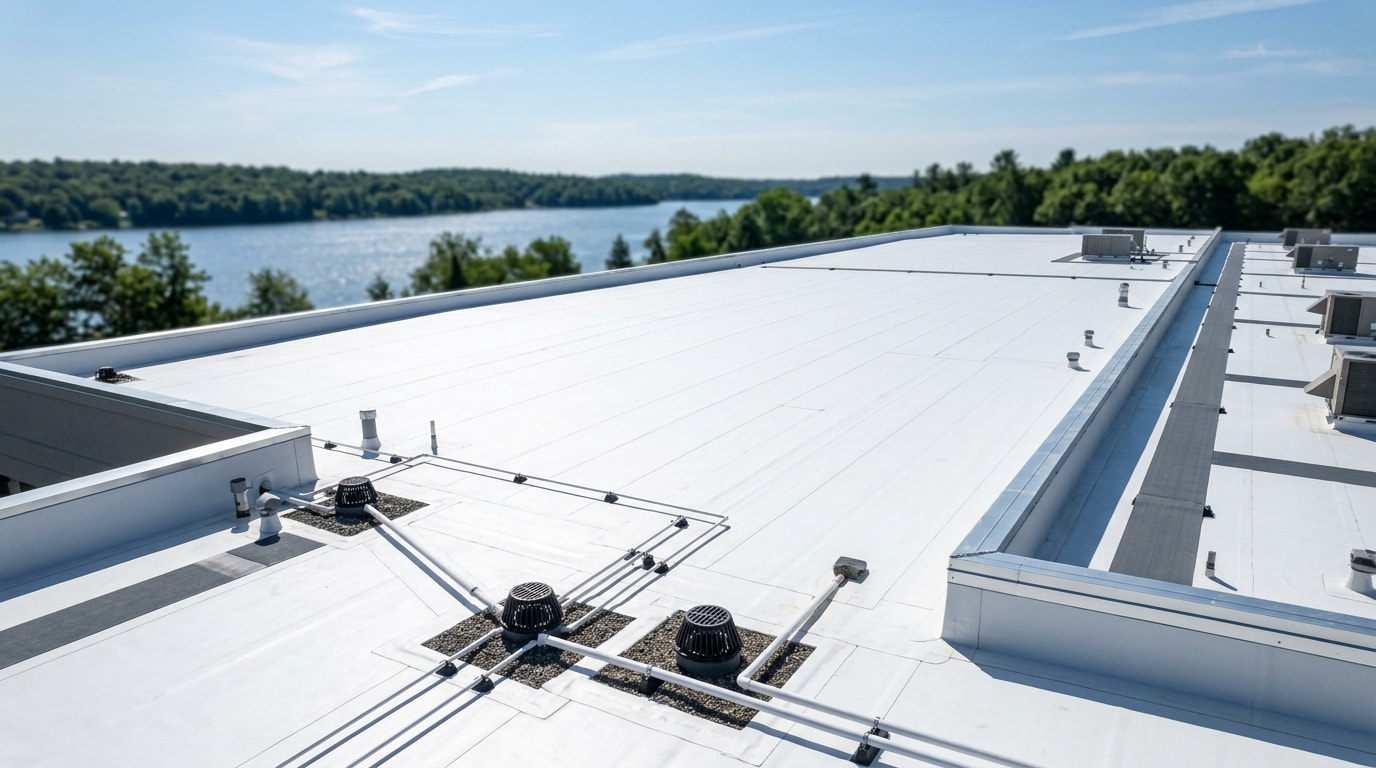
Flat roof waterproofing in Lake of the Ozarks, MO is the difference between a membrane that shrugs off lake humidity and one that rots from the inside out. Across the dock houses, condos, and commercial buildings we service around the lake, the same pattern repeats: a small crack or a pooling spot gets ignored through one storm season, then turns into a deck replacement the next. This guide covers what actually damages flat membranes here, how to inspect for it yourself, and which waterproofing systems hold up against this specific climate.
Why Flat Roofs Need Dedicated Waterproofing
Flat roof waterproofing means sealing a low-slope membrane so it resists pooling water, UV breakdown, and moisture intrusion over time. Low-slope roofs lack the pitch to shed rain quickly.
They depend almost entirely on membrane coatings, seam integrity, and drainage design to stay watertight.
Humidity at the lake adds another layer of stress. Moist air slows evaporation, which gives pooled water more time to find a weak seam or pinhole in the membrane.
The National Roofing Contractors Association's own technical guidance is blunt about the drainage standard contractors are held to: "The criterion for judging proper slope for drainage is that there be no ponding water on the roof 48 hours after a rain during conditions conducive to drying." That 48-hour mark is worth remembering the next time you walk your roof after a storm.
How Lake of the Ozarks' Climate Attacks Flat Roofs
Lake of the Ozarks weather is not easy on flat roofing systems. Humidity hangs heavy near the water, summer storms roll through fast, and strong UV exposure bakes membranes for months at a stretch.
Winter adds a second attack: freeze-thaw cycling. The University of Missouri Climate Center notes that the West Ozarks region averages about 100 days a year with temperatures below 32°F , and every one of those cycles expands and contracts trapped moisture inside existing cracks.
Commercial flat roofs around the lake tend to show wear first, simply because larger surface areas create more low spots where water can collect. If you manage a commercial property, our commercial roof repair team can tell you within a single visit whether a section needs a patch or a full recoat. Property owners across our Lake of the Ozarks service area often notice soft spots or discoloration long before a leak shows up indoors, and by then the membrane damage is already underway.
Inspecting Your Flat Roof for Damage
Before any waterproofing or recoating project begins, a thorough inspection comes first. Use a secured ladder and anti-skid footwear, since wet or algae-covered surfaces get slippery fast.
Once you're safely on the roof, look for three warning signs:
- Cracks or alligatoring across the membrane surface
- Standing water that lingers more than two days after rain
- Blisters or raised bubbles in the coating
A professional roof inspection catches all three before they become structural problems, and it's the fastest way to know whether you need a $400 patch or a full membrane replacement.
Cracks and Alligatoring
Sun exposure and trapped moisture cause a pattern called alligatoring, a web of shallow cracks resembling reptile skin across the membrane. Missouri's freeze-thaw cycle makes this worse, since repeated expansion and contraction widens existing cracks every winter.
Cracks wider than roughly 10mm usually need flexible mesh reinforcement rather than a simple patch. Smaller cracks respond well to professional-grade membrane sealants applied during a dry, mild window.
Standing Water and Ponding
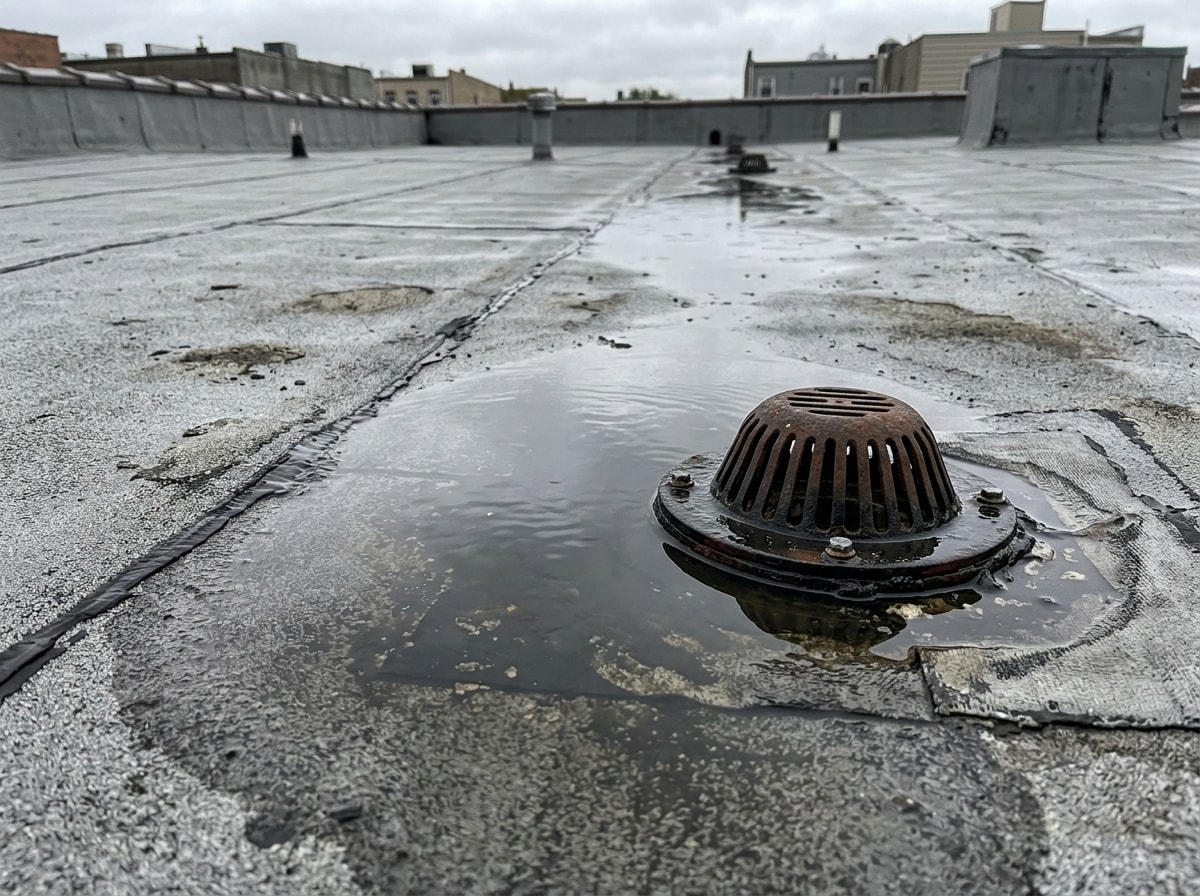
Standing water that's still visible more than 24 to 48 hours after rainfall signals that drainage isn't doing its job. Check the roof two days after a storm; if puddles remain, pooling is a recurring issue, not a one-time fluke.
Here's what most homeowners never calculate: water weighs about 5.2 pounds per square foot for every inch of depth. Two inches of standing water across a 1,000-square-foot section adds roughly 10,400 pounds of extra dead load, weight that many older flat roof decks were never designed to carry. That's why chronic ponding isn't just a cosmetic issue. It breaks down the membrane, invites algae, and can threaten the deck structure itself.
Blisters
Blisters form when air or moisture gets trapped beneath the membrane, creating raised bubbles that weaken the surface. They often appear after an installation error or when trapped moisture expands under summer heat.
Left alone, blisters eventually crack open and expose the roof deck to direct water, accelerating damage. A routine seasonal inspection usually catches them while they're still a minor fix.
Seasonal Flat Roof Maintenance Checklist
Flat roof maintenance works best on a seasonal rhythm, especially for lake properties that sit vacant part of the year.
- Spring: Check for winter cracking and clear debris left over from colder months.
- Summer: Watch for blister formation during peak UV exposure.
- Fall: Prioritize gutter maintenance and clear drains before leaves and storm runoff clog the system.
- Winterizing a lake home: Clear drains, trim overhanging branches, and confirm flashing is sealed tight before closing up for the season.
- After any major storm: A quick walkaround catches standing water or debris before it causes lasting damage.
A standing roof maintenance program handles this rhythm automatically, which matters most for owners who aren't at the lake year-round.
Best Flat Roof Sealants and Coatings for Lake Conditions
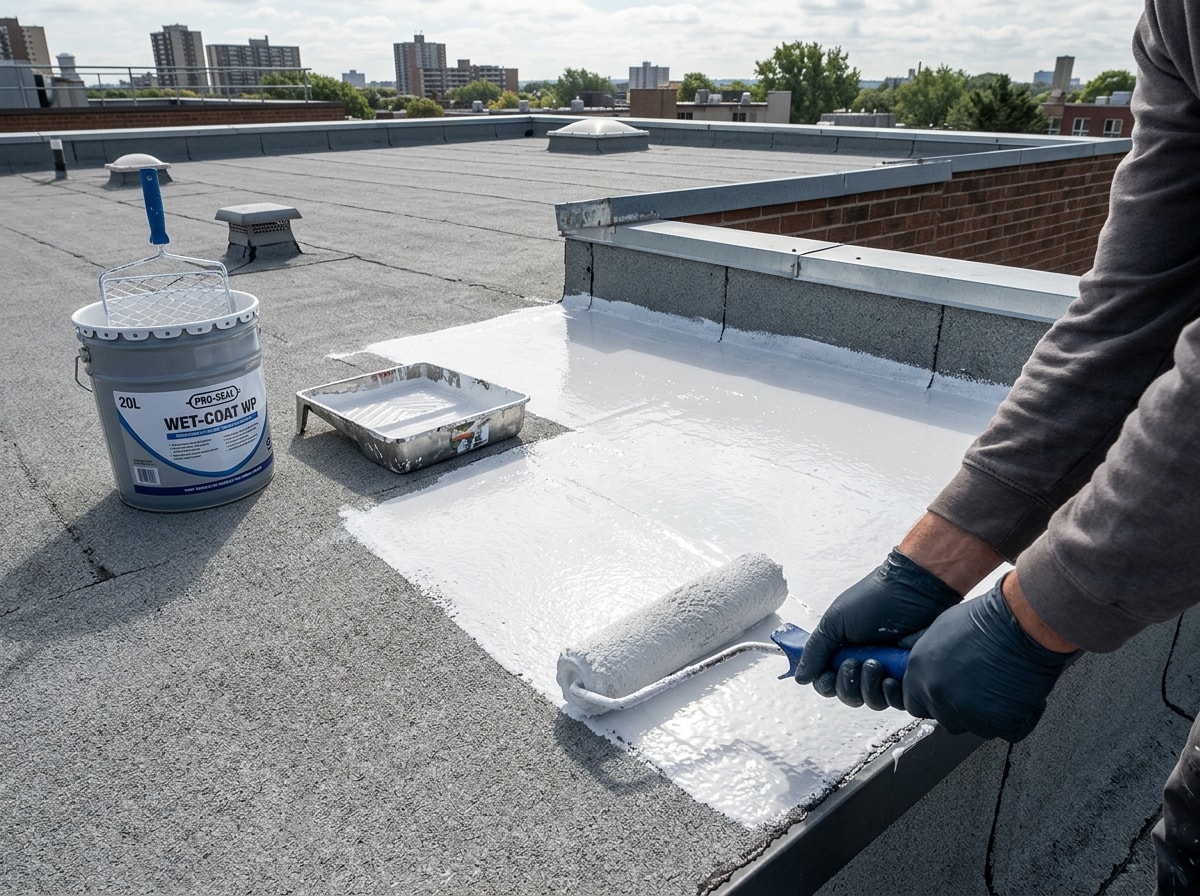
Surface preparation matters as much as the sealant itself. A clean, dry, properly primed membrane helps any coating adhere correctly and last its full service life.
| Coating Type | Best For | Key Trait |
|---|---|---|
| Liquid rubber | General waterproofing, temperature swings | Seamless, flexible, strong UV resistance |
| Elastomeric | Roofs needing reflectivity | Stretches and recovers shape; often white/reflective |
| Silicone | Roofs with chronic ponding | Best ponding-water resistance of the three |
Reflective coatings carry a real efficiency benefit for lake homes that sit in direct sun most of the day. The U.S. Department of Energy's Federal Energy Management Program has found that an ENERGY STAR-qualified cool roof product saves money if priced no more than about $0.64 per square foot above a less efficient model , which makes reflective elastomeric and silicone systems worth the small cost premium on most lake properties.
Flat Roof Installation: Materials, Lifespan, and Code Minimums
Most flat roofs around the lake use one of four materials. A typical installation follows the same sequence regardless of material: inspection, material recommendation, surface preparation, installation with proper drainage detailing, and a final inspection to confirm everything is sealed.
| Material | Typical Lifespan | Cost Tier | Ponding Tolerance |
|---|---|---|---|
| TPO | 15-20 years | Mid-range | Moderate |
| EPDM | 20-25 years | Budget-friendly | Decent if seams are sealed well |
| PVC | 20-30 years | Higher cost | Strong |
| Modified bitumen | 10-20 years | Lower upfront cost | Best for smaller residential sections |
Building codes aren't vague on this point. The International Building Code requires that liquid-applied roofing have a design slope of not less than 1/4 unit vertical in 12 units horizontal, or 2-percent slope , and the same minimum applies to thermoset and thermoplastic single-ply membranes. Any sound flat roof installation, including a full roof replacement, should meet that threshold to avoid chronic pooling down the road. If you're comparing materials for a low-slope commercial building elsewhere in the region, our flat roofing cost guide for Jefferson City, MO breaks down installed pricing by material in more detail.
Residential Flat Roofing: Style, Insulation, and Energy Savings
More homeowners around the lake are choosing residential flat roofing for its clean, modern look and simpler upkeep. Adding flat roof insulation during installation also brings real energy savings, keeping lake homes cooler in summer and warmer in winter.
If an existing residential section needs patchwork before a full waterproofing project, our residential roof repair team handles those smaller fixes without disrupting the rest of the roof.
When to Call a Professional for Flat Roof Waterproofing
Sealant application looks simple but demands precise timing, correct coating thickness, and careful attention to seams and flashing. A rushed application can undo months of protection in a single storm season.
Beyond minor spot repairs, flat roof waterproofing is better left to a contractor who knows lake-area conditions. As a full-service roofing, gutter, and siding contractor, Roof Direct Midwest handles flat roof waterproofing alongside inspections, repairs, and replacement for properties across the region.
If your roof needs attention, request a free estimate before a small issue turns into a costly one.
FAQ
Which coating is best for a flat roof?
An urethane-silicone hybrid system performs well in most conditions. Pure silicone-based coatings work best on roofs dealing with frequent ponding water.
How often should flat roof waterproofing be reapplied?
Most waterproofing lasts 5 to 15 years depending on material. Plan professional reassessments every 3 to 5 years, with liquid coatings recoated every 7 to 10 years and single-ply membranes lasting 20-plus years.
What are the common signs of damage to look for during a flat roof inspection?
Watch for alligatoring cracks, standing water lingering past 48 hours, and raised blisters. These are the three most common signs a membrane needs attention.
How can I prevent mold growth on my lakefront roof?
Choose algae-resistant roofing materials and schedule regular ventilation checks to stop trapped moisture from building up. Clearing gutters and drains each fall also keeps standing moisture away from the roof edge.
How much does flat roof waterproofing cost?
Cost depends on roof size, material, and current condition, but most lake-area projects range from spot sealant repairs in the few-hundred-dollar range up to several thousand dollars for a full recoat. A free estimate after an on-site inspection gives you an exact number.
What's the best time of year to waterproof a flat roof at the Lake of the Ozarks?
Late spring through early fall, during a stretch of dry, mild weather, gives most coatings the cure time they need. Avoid application right before a freeze or during peak summer humidity.