
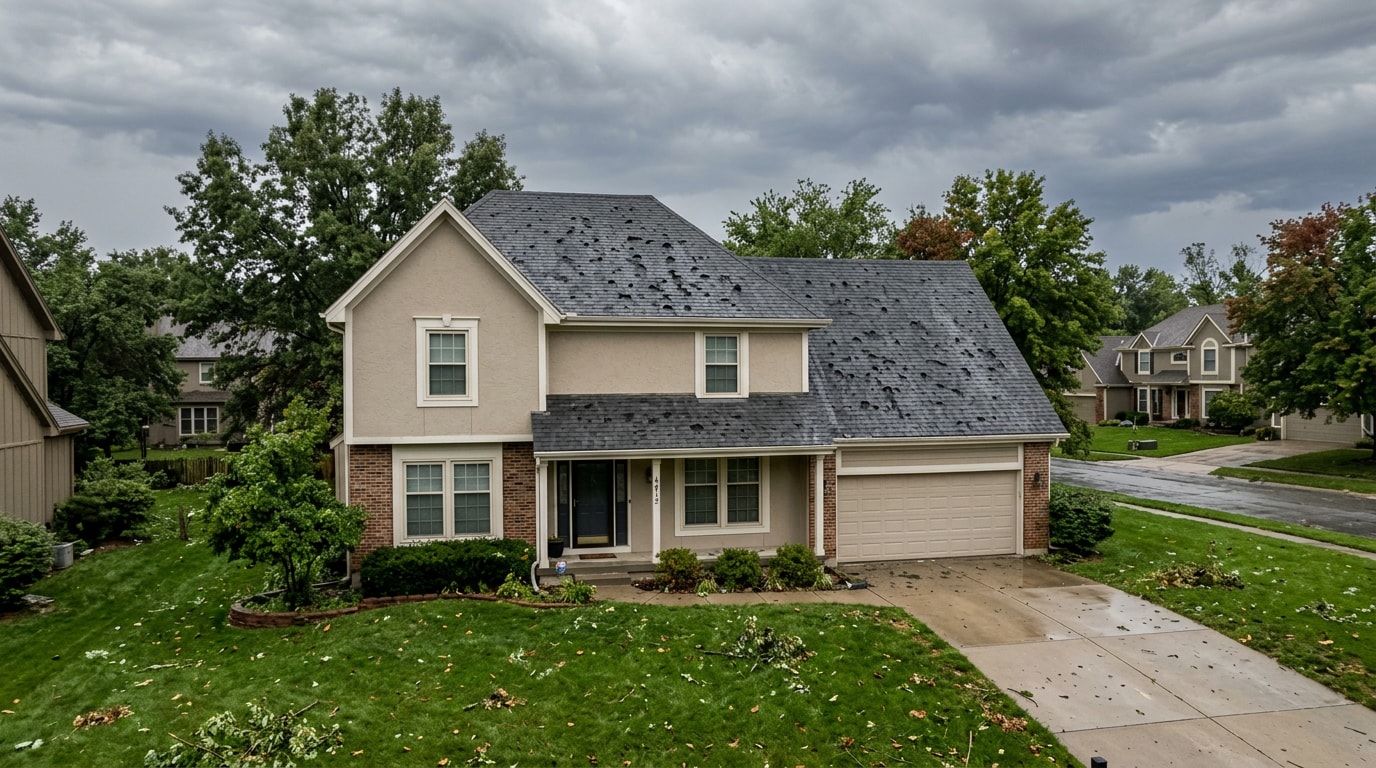
Finding reliable hail damage roofing contractors in Kansas City, MO matters more after a storm than before one, because hail damage rarely looks dramatic. A storm rolls through, the yard looks fine the next morning, and the roof seems untouched until a leak shows up months later. This guide breaks down what damage actually looks like, what Missouri law requires of the contractor you hire, and how to avoid getting shorted on an insurance settlement.
Visit Roof Direct Midwest to see our services and request a free estimate.
Signs of Hail Damage on a Kansas City Roof
Hail damage hides in plain sight. It shows up differently depending on what your roof is made of, and most of it is not visible from the driveway.
- Bruised or dented asphalt shingles look like dark, soft spots where granules have been knocked loose, exposing the mat underneath.
- Granule buildup in gutters and downspouts strips away the shingle's UV shield, which quietly speeds up aging long after the storm has passed.
- Dented soft metals on vents, flashing, and gutters are often the clearest ground-level clue, since these surfaces dent before shingles show visible damage.
- Cracked flashing around chimneys and valleys opens a direct path for water to reach the decking.
- Punctured membranes on flat and low-slope roofs can compromise the entire waterproofing layer in a single impact.
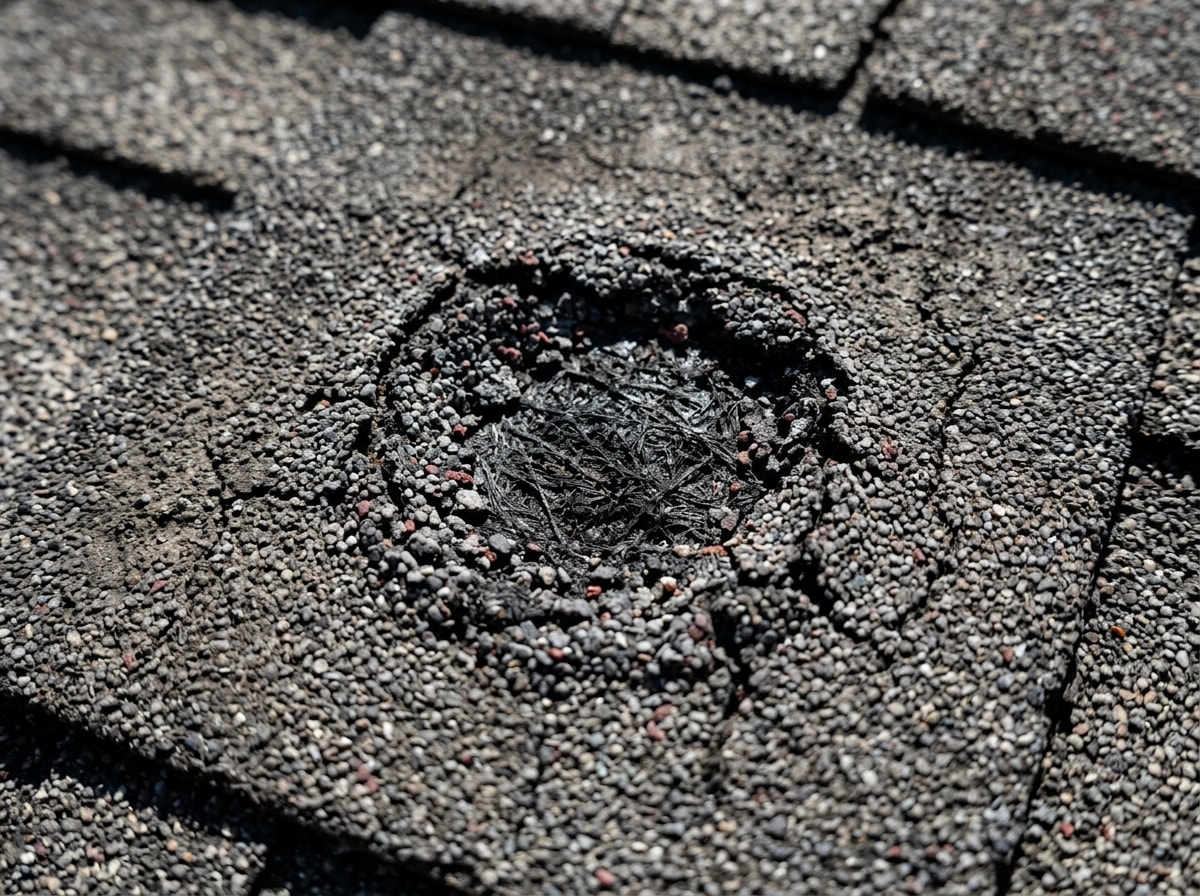
Our estimators check soft metals first on every post-storm inspection in the metro, because a dented gutter or AC fin is often the fastest way to confirm a hail event happened at all, before anyone climbs a ladder.
How Much Hail Risk Does Kansas City Actually Face?
Kansas City sits inside the broader Midwest hail corridor, and spring storm systems bring hail to the metro almost every year. If you want to check storm history for your own address rather than take a contractor's word for it, NOAA's Storm Events Database lets you search hail, wind, and tornado reports by county going back decades. It is a free way to confirm whether a storm severe enough to damage roofing actually hit your neighborhood on a given date, which matters when you are building an insurance claim timeline.
Missouri Roofing Contractor Registration: What to Verify First
Missouri has no statewide roofing contractor license, which surprises a lot of homeowners shopping after a storm. That gap is exactly where storm-chasing crews from out of state try to slip in.
What the state does require: since January 1, 2023, anyone operating as a roofing contractor in Missouri must register with the Missouri Department of Commerce and Insurance. Registration is only granted after the contractor files proof of liability insurance, workers' compensation coverage, and motor vehicle insurance, with liability coverage required at $1 million or more. Registration is not a skills test, so it will not tell you whether a crew does good work, but it does confirm the contractor is insured and accountable before they ever touch your roof.
Ask any contractor you're considering for their registration number and the name of their insurance carrier, then verify both before signing a contract. Kansas City also layers its own permitting requirements on top of the state registration, so a contractor working in your neighborhood should be able to tell you what permit your specific job needs without being asked twice.
Repair or Full Replacement? How to Tell
The decision comes down to spread, not just severity.
| Situation | Typical Recommendation |
|---|---|
| Damage limited to one or two slopes, roof under 10 years old | Targeted repair |
| Bruising scattered across most or all slopes | Full replacement |
| Roof already near the end of its service life | Full replacement, even with moderate damage |
| Flat or low-slope membrane punctured | Section replacement or full replacement, depending on membrane type |
A contractor who recommends full replacement for a single damaged slope, or a minor patch for roof-wide bruising, is worth a second opinion. Compare findings against our roof replacement and residential roof repair pages to understand what each process actually involves before you decide.
What a Professional Hail Inspection Should Include
The National Roofing Contractors Association (NRCA) has been direct about this for years: homeowners should inspect storm damage from the ground only and leave the roof walk to a trained professional, since the risk of falling is too great without proper safety systems in place.
A legitimate inspection follows a sequence, not guesswork:
- Safety check – the contractor confirms the roof is safe to walk before stepping on it.
- Slope-by-slope assessment – shingles, flashing, vents, and valleys are examined individually, not glanced at from one spot.
- Photo documentation – every finding gets photographed with location notes, not just described verbally.
- Written report – you receive an itemized document you can hand to an insurance adjuster, not a verbal summary.
- Estimate delivery – a line-item estimate follows within a day or two, not weeks.
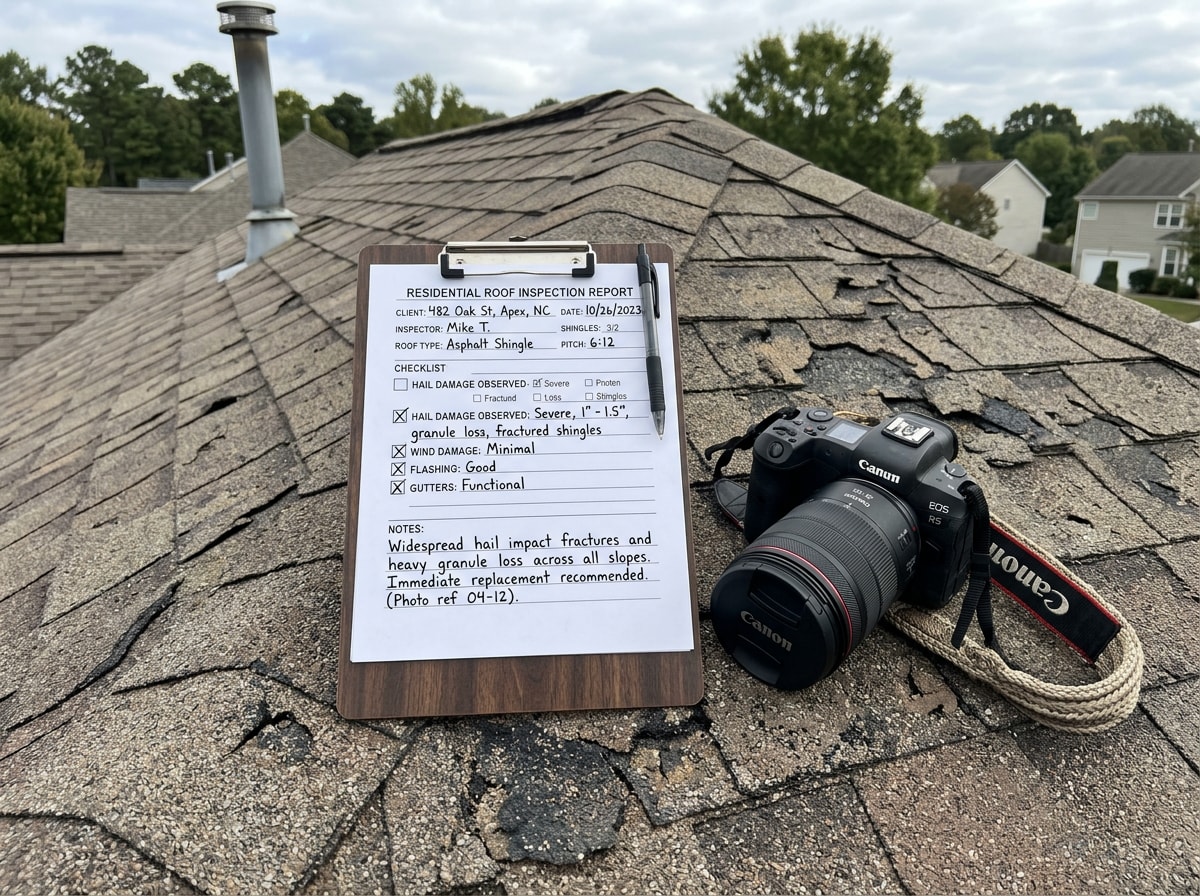
If a contractor skips the written report and goes straight to a signature request, that's a reason to pause. Our roof inspection process follows this exact sequence, and we also check gutters while we're up there since hail that dents a gutter run almost always dents the shingles above it. If your gutters took the brunt of it, our gutter repair team can handle that separately from the roof scope.
Insurance Claims: ACV vs. RCV and Your Deductible
Two settlement types apply to roof claims, and which one applies to your policy can mean a difference of thousands of dollars.
| Settlement Type | How It Pays | What It Means for You |
|---|---|---|
| Actual Cash Value (ACV) | Replacement cost minus depreciation based on your roof's age | Older roofs get settled for significantly less than a new one would cost |
| Replacement Cost Value (RCV) | Full replacement price, often with a holdback released after work is finished | You get the full repair cost, but only after the job is documented as complete |
The National Association of Insurance Commissioners notes that replacement cost coverage on a roof is typically available with no deduction for depreciation, while actual cash value policies factor in age and wear before issuing payment. Check your declarations page to see which one applies to you, since many standard policies default to ACV on the roof specifically, even when the rest of the dwelling is covered at replacement cost.
Deductibles work differently for wind and hail claims too. A flat-dollar deductible stays fixed regardless of claim size, but many Missouri carriers apply a percentage deductible instead, often 1% to 2% of your home's insured value, which scales with the size of the loss. A $300,000 insured home with a 1% wind/hail deductible means $3,000 comes out of your pocket before coverage kicks in, a very different number than a flat $1,000 deductible. Confirm which type you carry before you file.
Why Kansas City Homeowners Choose Roof Direct Midwest
Credentials matter more than a sales pitch when a crew is about to climb your roof. Before you hire anyone, confirm:
- Active Missouri registration with the Department of Commerce and Insurance
- Current liability and workers' compensation coverage
- A written, itemized estimate before any work starts
- Manufacturer certifications for the materials they're installing
Roof Direct Midwest handles hail and storm damage inspections, repairs, and full replacements across the Kansas City metro, with the same documented, slope-by-slope process described above on every claim-related job. You can see completed work on our projects page or browse our full roofing contractor services if you're still deciding what your roof needs. For a broader look at material choices across the region, our Midwest roofing material guide covers what holds up best against repeated hail exposure.
Get a free estimate before your next inspection, and bring your insurance declarations page so we can tell you upfront whether you're working with ACV or RCV coverage.
Reviewed by the Roof Direct Midwest estimating team, Missouri-registered roofing contractors serving the Kansas City metro. Questions about a specific roof? Contact us directly.
FAQ
Does homeowners insurance cover hail damage to a roof?
Most standard homeowners policies cover hail damage, but many carriers apply a separate wind/hail deductible that differs from your regular deductible, and some roofs are covered at actual cash value rather than full replacement cost. Check your declarations page for both details.
How do I know if my roof has hail damage?
Start at the gutters and ground-level metal. Dented vents, dented AC fins, and granules collecting in downspouts are visible without a ladder and usually mean the roof above took the same hit. A full confirmation requires a trained inspector walking the roof, since bruised shingles often look fine from a distance.
How much does hail damage roof repair cost in Kansas City?
Costs vary enormously by scope. A minor shingle patch or vent replacement can run a few hundred dollars, while a full tear-off and replacement on an average metro home typically falls in the thousands to low five figures depending on size and material. Get an itemized estimate rather than relying on a ballpark figure, since roof size, pitch, and material each change the number significantly.
Should I file an insurance claim for minor hail damage?
Filing can affect future premiums, so many homeowners document the damage with photos now and hold off filing unless it worsens or shows up alongside other storm damage. A professional inspection can tell you whether what you're seeing is cosmetic or structural before you decide.
How do I know if my roof needs repair or full replacement?
It depends on spread, not just severity. Damage isolated to one or two slopes on a newer roof often qualifies for a targeted repair, while bruising scattered across the entire roof, especially on a roof already near the end of its service life, usually points toward full replacement.
How long do I have to file a hail damage insurance claim?
Filing windows vary by carrier and policy, so check your declarations page or call your agent directly for your specific deadline rather than assuming a standard timeframe applies.
What size hail causes roof damage?
Hail around one inch in diameter can start to bruise asphalt shingle mats, and anything over an inch and a quarter raises the odds of damage significantly. Wind speed during the storm also plays a role, since wind-driven hail hits roofs at a sharper, more damaging angle than hail falling straight down.