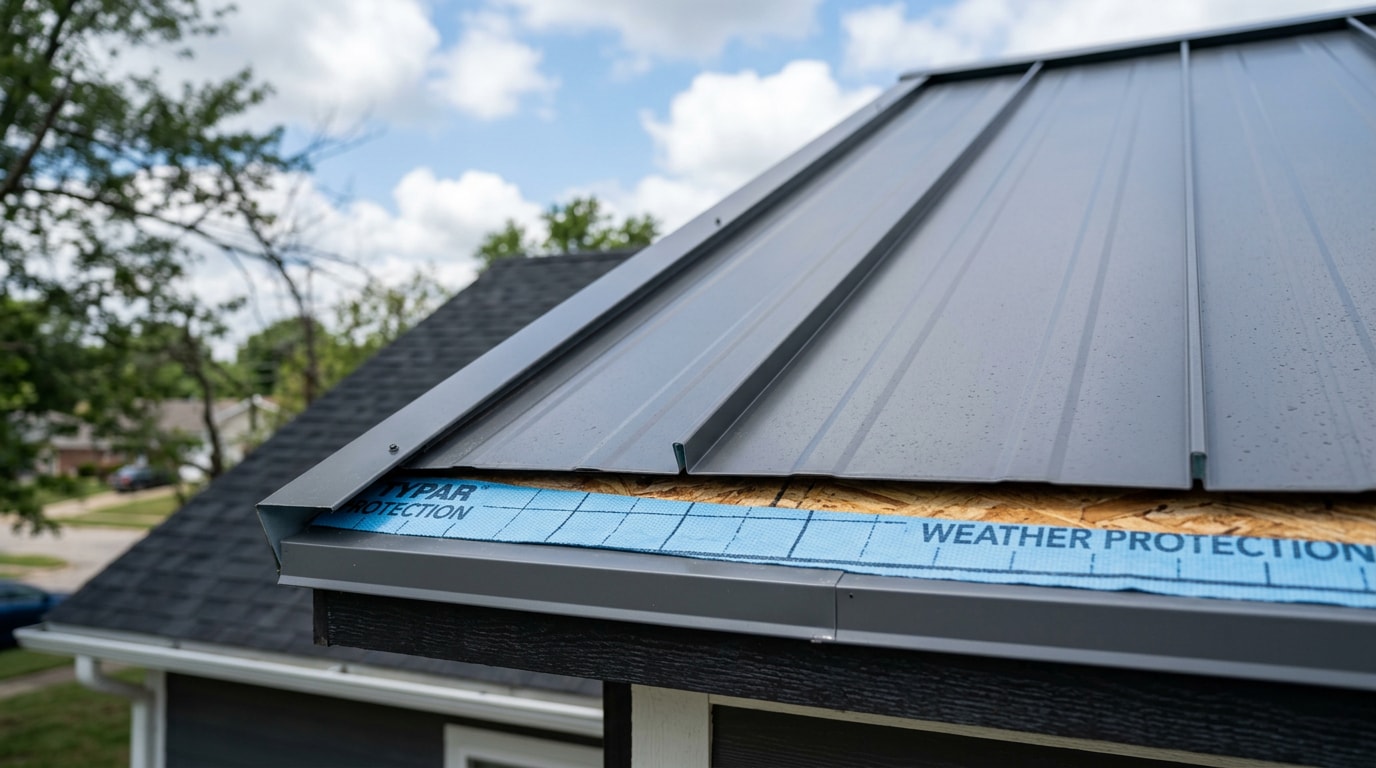
Metal roofing underlayment in Jefferson City, MO is the hidden layer that decides whether your roof deck survives a Missouri hailstorm or quietly rots underneath. Homeowners usually focus on panel color and profile, then sign a contract without ever asking what's going underneath. This guide breaks down the real tradeoffs between felt, synthetic, and ice-and-water shield, plus what Missouri code actually requires before your roof passes inspection.
Why Jefferson City's Weather Makes Underlayment Choice Critical
This isn't a generic weather warning. Cole County has already seen what a bad storm season can do to a roof deck.
On May 22, 2019, an EF-3 tornado with estimated peak winds of 160 mph tracked through the area and crossed into Callaway County just northeast of Jefferson City, part of a multi-day severe weather outbreak that produced storms favorable for hail and tornadoes, generating five tornadoes in the county warning area including the EF-3 that hit Jefferson City . That same storm system also produced damaging straight-line winds across the area.
Hail is just as routine. NOAA's Storm Prediction Center has logged hail reports within a few miles of downtown Jefferson City measuring over an inch in diameter during a single spring outbreak, with multiple reports clustered in Cole and Callaway counties on the same morning.
What this means for your roof deck:
- Wind-driven rain and hail impacts routinely test the field of the roof, not just the edges.
- Freeze-thaw cycling in winter stresses eaves and valleys even when no storm is involved.
- A roof deck with weak or missing underlayment is the first thing to fail when panels get compromised.
Homeowners planning a new metal roof should raise underlayment specifics with their installer as part of the roofing contractor conversation, not as an afterthought after the panels are already picked out.
Asphalt Felt Underlayment: The Old Standard
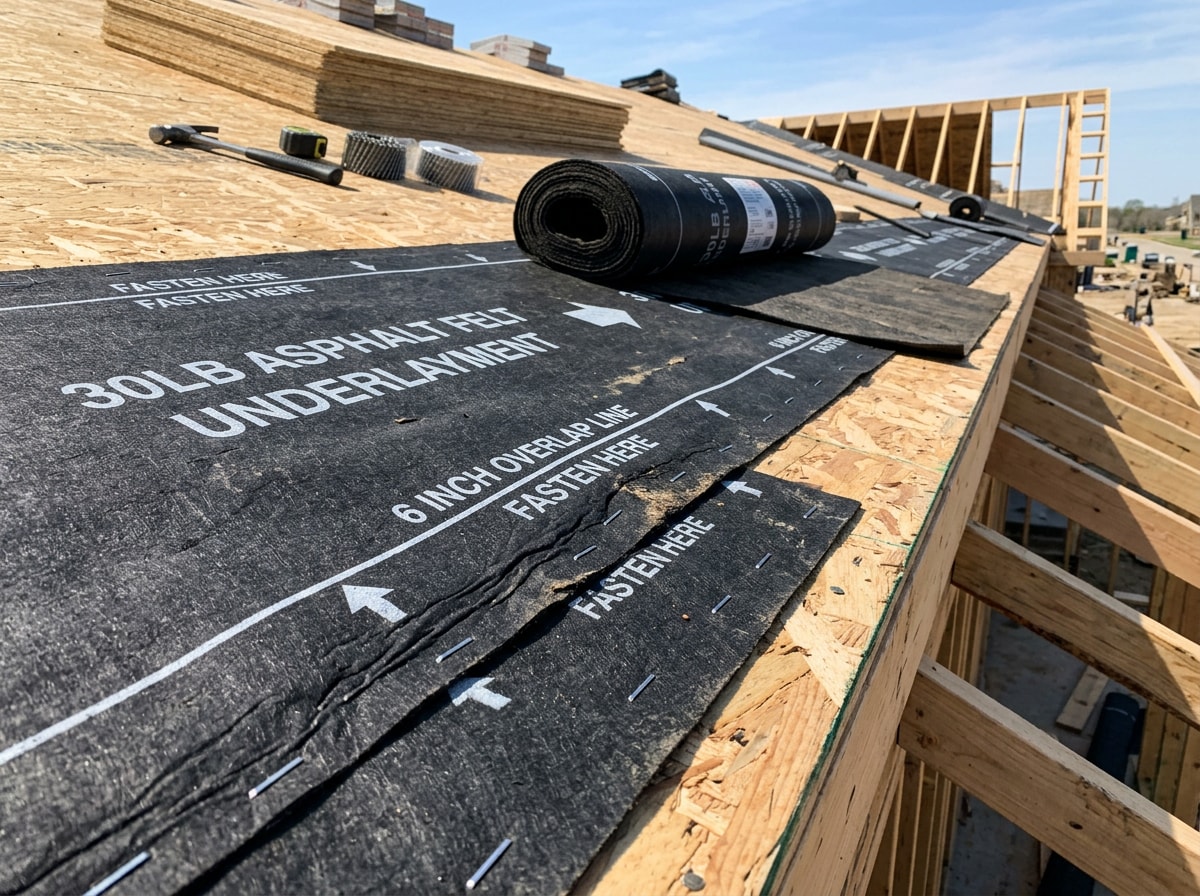
Felt underlayment, sometimes called tar paper, has been the default roofing layer for generations. It's made of cellulose or fiberglass mat saturated with asphalt and comes in two common weights.
- 15-lb felt: lighter, cheaper, thinner.
- 30-lb felt: heavier, more tear-resistant, the more common choice under metal panels.
The main appeal of felt is cost. It's the least expensive underlayment on the market, which is why it still shows up on budget-conscious metal roof jobs across Missouri.
Felt has real limits under metal panels specifically. Metal absorbs and radiates heat differently than asphalt shingles do. Felt can dry out, crack, or wrinkle faster under that heat cycling, and it soaks up moisture more readily than newer materials.
Synthetic Underlayment: The Default Choice for Most Metal Roofs
Synthetic underlayment is manufactured from woven or spun polypropylene or polyethylene. It has become the standard recommendation from most metal roof installers for a simple reason: it holds up better in almost every category that matters.
It's notably tear-resistant, handles foot traffic during installation, and tolerates sun exposure far longer than felt if panels aren't installed right away.
There's a detail most guides skip. Metal panels expand and contract more than shingles do as temperatures swing, and that constant movement can wear down underlayment that isn't rated for the heat buildup underneath a metal roof. This is why metal-specific installations increasingly call for high-temperature-rated synthetic or self-adhered products rather than whatever synthetic roll happens to be on the truck.
Early peel-and-stick products had a similar weak spot. Early peel and stick products were not rated for high temperature and tended to come apart under the heat of metal roof panels , which is part of why synthetics became the industry default. The good news is pricing on properly rated products has improved. Today there are many options for quality peel-and-stick underlayments, and pricing has come down considerably compared to a decade ago.
Ice-and-Water Shield: Where It's Required, Not Everywhere
Ice-and-water shield is a self-adhering rubberized asphalt membrane, and it's targeted at specific high-risk areas rather than spread across the whole deck.
It's required or strongly recommended at:
- Eaves
- Valleys
- Around penetrations like chimneys and vent pipes
Missouri's freeze-thaw cycles make eave protection especially important. When snow melts during the day and refreezes overnight, ice dams can form and push water backward under standard underlayment. The membrane's self-sealing layer closes tightly around roofing fasteners, so a nail or screw driven through it doesn't automatically create a leak point.
Full-deck coverage isn't always the answer, though. There are some circumstances where you may put ice and water on the whole deck, and some building codes may require it, but in most circumstances you should not put ice and water protectors on the entire roof deck . Synthetic underlayment is built to protect the rest of the field.
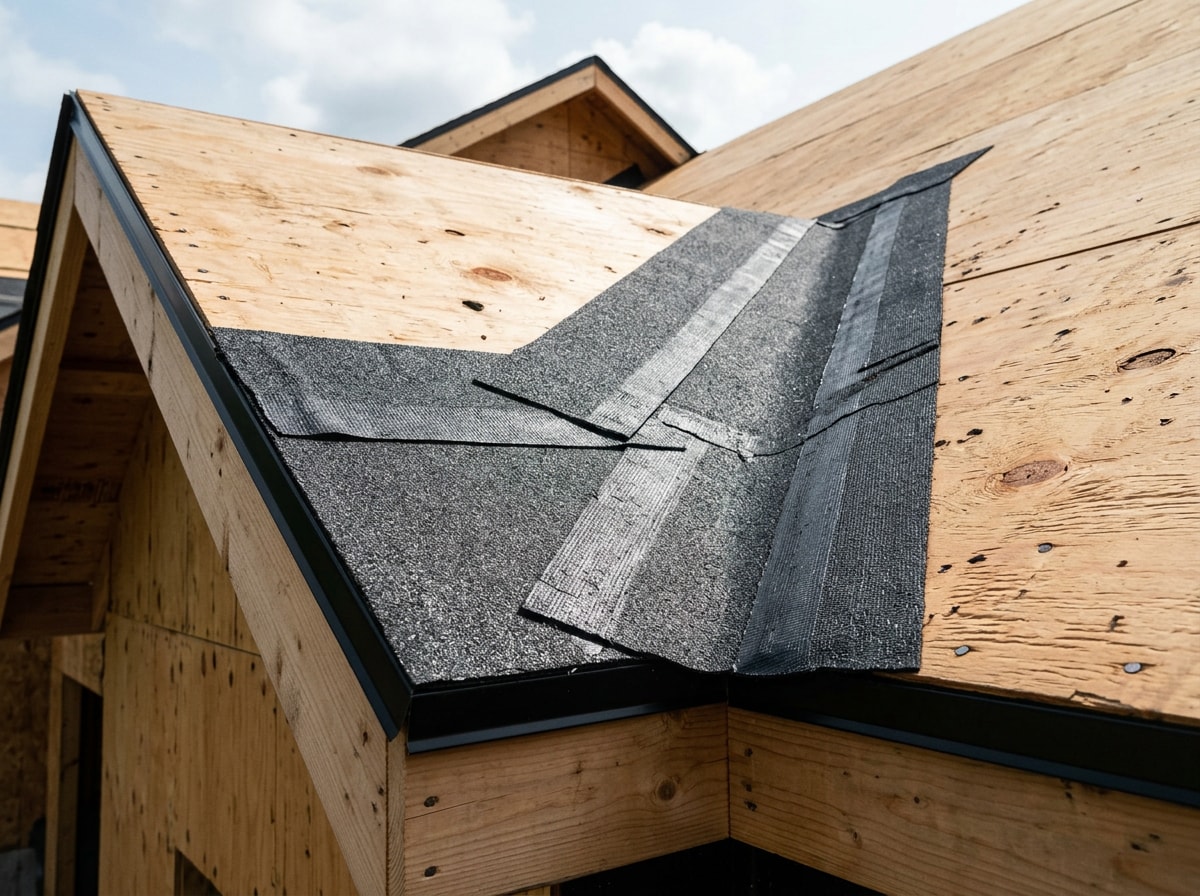
Felt vs. Synthetic vs. Ice-and-Water Shield
Here's how the three options stack up on the factors that matter most for a Jefferson City metal roof.
| Factor | Felt (15/30-lb) | Synthetic | Ice-and-Water Shield |
|---|---|---|---|
| Relative cost | Lowest | Mid-range | Highest per square |
| Typical lifespan | 10 to 20 years | 25+ year ratings common | Life of the roof in protected zones |
| Heat tolerance under metal | Weakest, prone to cracking | Good, with high-temp options available | Best when high-temp rated |
| Where it's used | Whole deck (budget jobs) | Whole deck (most common) | Eaves, valleys, penetrations |
| Best fit | Lowest-cost reroofs | Standard metal roof installs | Freeze-thaw and ice-dam zones |
For most Jefferson City metal roof projects, the practical answer is synthetic across the field of the roof paired with ice-and-water shield at the vulnerable edges. If you're weighing this against a full roof replacement, it's worth getting underlayment specs in writing before work starts, not after.
Missouri Code Requirements and ASTM Standards
Missouri's adopted building code requires underlayment beneath metal roof panels, along with corrosion-resistant fasteners rated for exterior exposure. The Jefferson City permitting office typically checks underlayment coverage, fastener type and spacing, and ice-and-water shield placement at eaves and valleys before signing off on a final inspection.
Missouri jurisdictions base these rules on the International Residential Code. Underlayment for roof coverings including metal roof panels must conform to the applicable standards, and must be applied and fastened according to the code's underlayment tables . The code also allows a self-adhered alternative. A minimum 4-inch-wide strip of self-adhering polymer modified bitumen underlayment complying with ASTM D1970 can be applied over joints in the roof decking as part of an approved assembly.
Underlayment products themselves are governed by ASTM standards covering felt, synthetic, and self-adhered membranes, including D226, D4869, and D1970. For metal panels specifically, manufacturer specs often tighten these rules further. For metal panels in high wind areas, only the heaviest D226 Type II and D4869 Type IV felt materials are allowed , which is one more reason synthetic or self-adhered products have become the practical default rather than standard felt.
Requirements can shift with code updates, so confirm which edition your local permit office has adopted before work begins. A roofer familiar with the Jefferson City, MO service area will already know what local inspectors look for.
How We Approach Underlayment on Jefferson City Roofs
When our crews tear off an older roof around Cole County, cracked, brittle felt is one of the most common failures we find, usually on a roof that was never built to carry metal panels in the first place. That's the gap this guide is meant to close before you sign anything.
If you want a second opinion on what's currently under your shingles or panels, a roof inspection is the fastest way to find out before storm season. For roofs that are in decent shape but aging, a roof maintenance program can catch underlayment failure early, before it turns into a deck replacement.
Ready to talk through options for your roof? Get a free estimate from Roof Direct Midwest and we'll walk your roof with you before recommending anything.
Homeowners outside city limits can check coverage across the broader Midwest region or visit the Roof Direct Midwest homepage for the full list of service areas.
FAQ
Does metal roofing need underlayment?
Yes. Missouri's adopted building code requires underlayment beneath metal roof panels, and it works as a backup moisture barrier if water ever gets past the panels. Skipping it risks deck rot and can cause a roof to fail inspection.
What is the best underlayment for a metal roof?
Synthetic underlayment rated for high heat is the best all-around choice for the field of a metal roof, paired with ice-and-water shield at eaves, valleys, and penetrations. That combination balances cost, tear resistance, and heat tolerance better than felt alone.
Can you put ice-and-water shield under the entire metal roof?
You can, and some codes or low-slope situations call for it, but it's not standard practice for most pitched metal roofs. Full synthetic coverage over the field, with ice-and-water shield concentrated at the vulnerable edges, is the more common and more cost-effective approach.
Does metal roofing need special high-temperature underlayment?
It's a smart upgrade rather than a strict requirement everywhere. Metal panels expand and contract more than shingles with temperature swings, and underlayment that isn't rated for that heat cycling can wear out faster underneath metal than it would under asphalt shingles.
What are the different types of underlayment for a metal roof?
The three main types are asphalt-saturated felt, synthetic underlayment, and ice-and-water shield, a self-adhering peel-and-stick membrane. Each offers a different balance of cost, durability, and protection against moisture and heat cycling.
Is underlayment required by building code for a metal roof in Jefferson City?
Yes. Missouri's adopted building code requires underlayment under metal roofing along with corrosion-resistant fasteners, and the local permit inspection confirms this before a project is signed off.