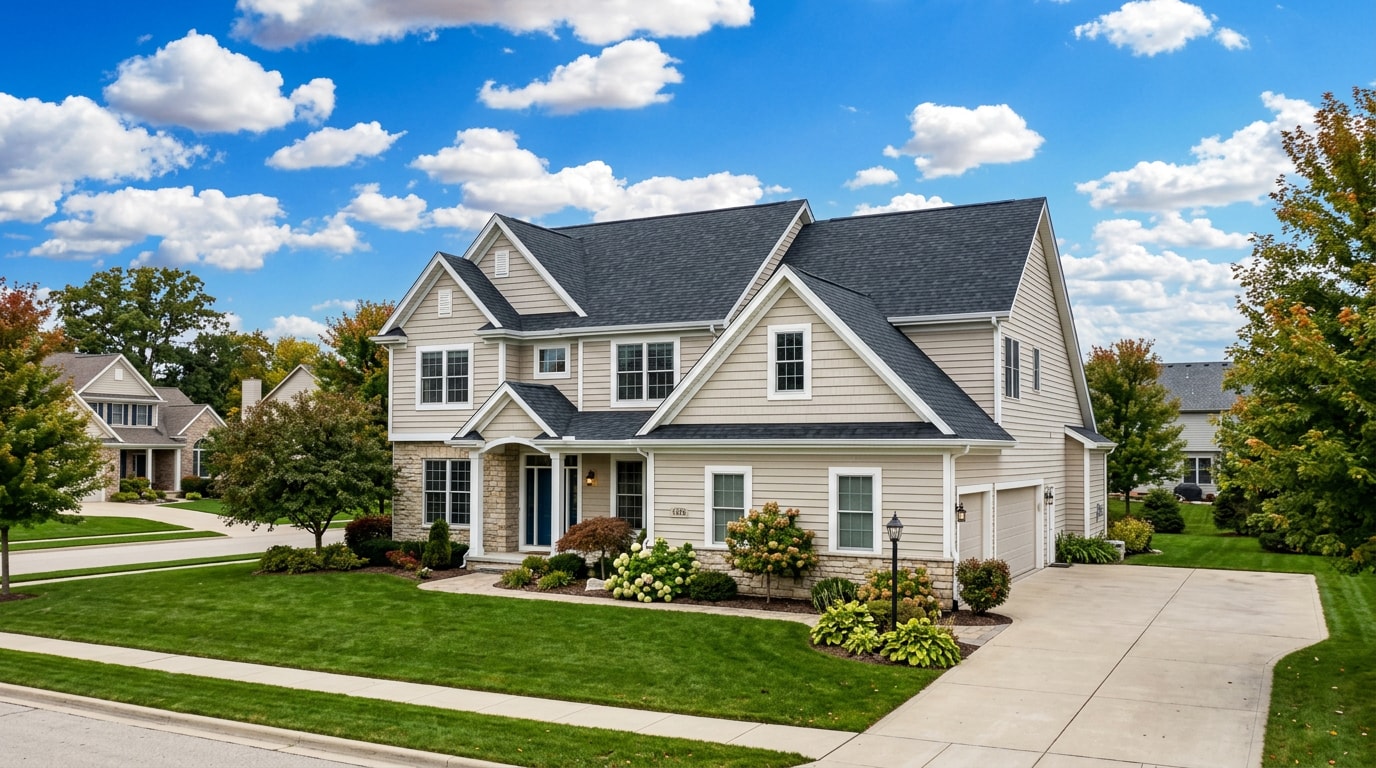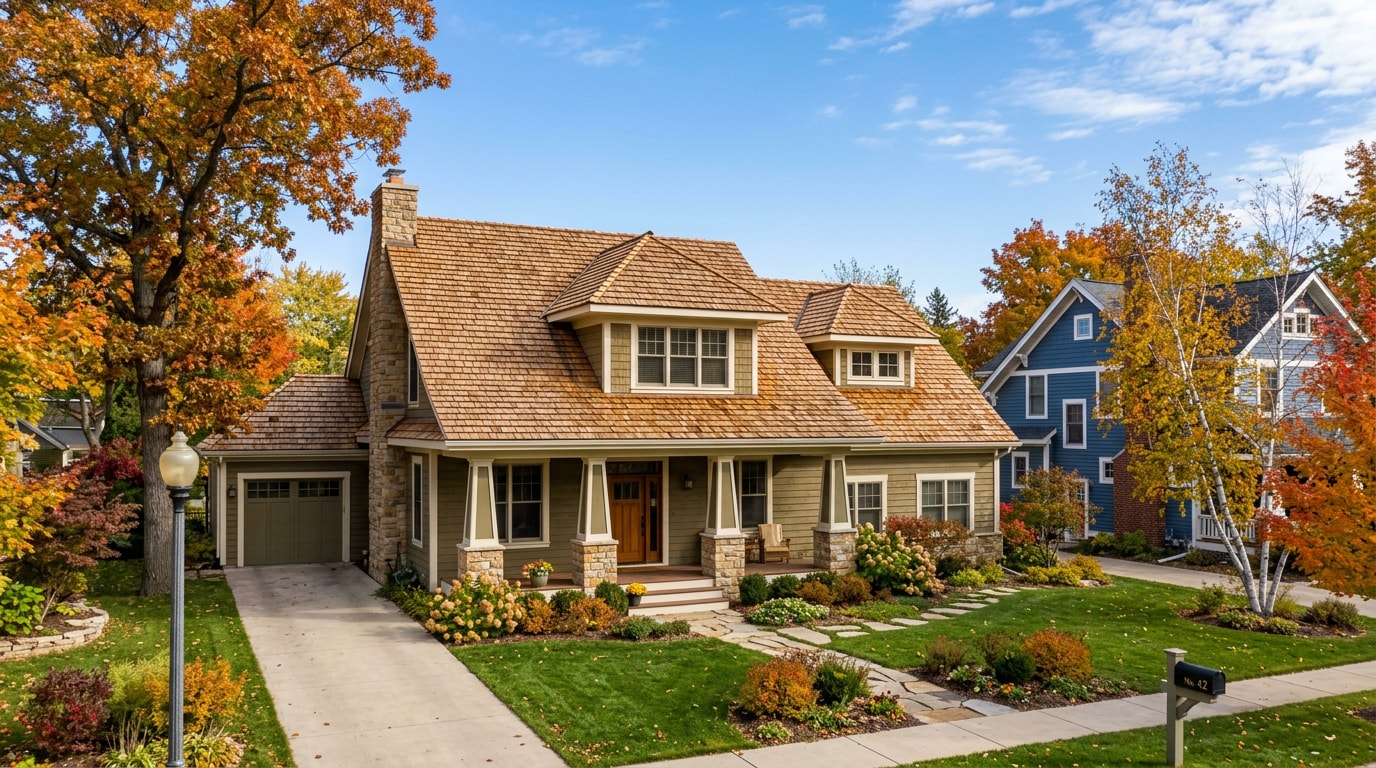
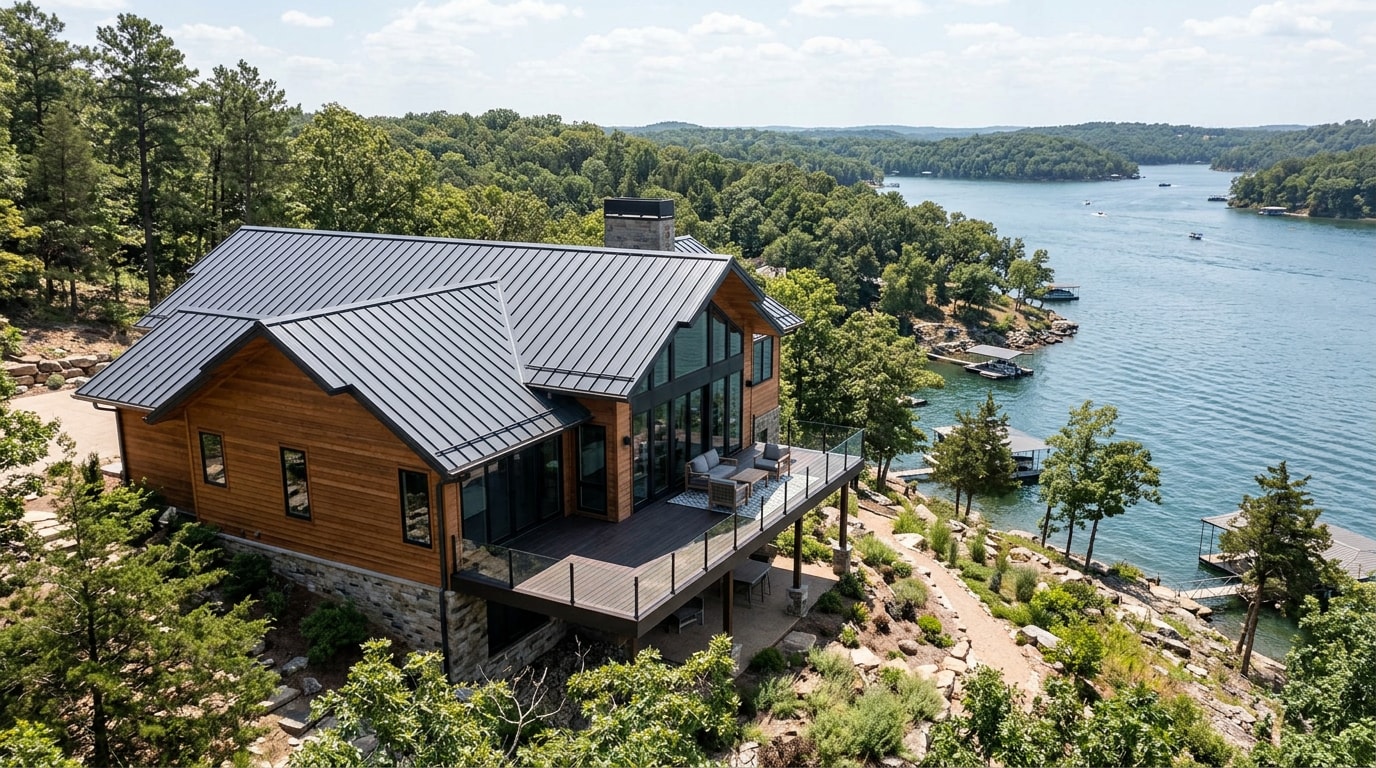
A galvalume roof at Lake of the Ozarks, MO has to handle morning lake fog, intense open-water UV, and fast-moving storms in the same season. That combination is why so many lake homeowners skip straight past asphalt shingles toward aluminum-zinc coated steel. Here's what the material actually costs installed in 2026, where it performs well around the lake, and where a different coating makes more sense.
How Much Does a Galvalume Roof Cost at the Lake in 2026?
Installed pricing depends almost entirely on panel profile and roof complexity, not on the coating itself. Bare or painted Galvalume is one of the least expensive metal roofing substrates on the market, which keeps total project costs well below aluminum, zinc, or copper systems.
| Panel Profile | Installed Cost (2026) | Typical Use at the Lake |
|---|---|---|
| Corrugated / exposed-fastener Galvalume | $6 – $10 per sq ft | Sheds, boathouses, docks |
| Ribbed / R-panel Galvalume | $7 – $11 per sq ft | Outbuildings, light commercial |
| Standing seam, snap-lock Galvalume | $9 – $16 per sq ft | Residential lake homes |
| Standing seam, mechanical-lock Galvalume | $11 – $20 per sq ft | High-wind, low-slope, commercial |
Steep lakefront lots, dormers, valleys, and dock structures add labor hours beyond a simple gable roof, which is why the same material can price out very differently from one property to the next. Want an exact number instead of a range? Get a Free Estimate and we'll measure your actual pitch, panel run, and trim package.
What Is a Galvalume Roof?
A galvalume roof is steel sheet coated with an aluminum-zinc-silicon alloy through a continuous hot-dip process. It's different from plain galvanized steel, which relies on a zinc-only coating, and it's now the default substrate under most standing seam and corrugated metal roofing sold in the U.S.
The coating composition isn't a marketing estimate. It's governed by a formal industry specification, ASTM A792, which covers 55% aluminum-zinc alloy-coated steel sheets in coils and cut lengths for applications requiring corrosion resistance or heat resistance or both. That standard sets two common coating-weight designations:
- AZ50 — the standard spec for most painted panels
- AZ55 — typically required for bare, unpainted Galvalume exposed long-term to weather
Manufacturing tolerances for both are locked in by that same ASTM spec, which is why coating performance stays consistent whether the coil came from a regional supplier or a national mill.
Galvalume Roof Pros and Cons for Lake of the Ozarks Homes
Galvalume's reputation rests on corrosion resistance, but that claim deserves a closer look for lake properties specifically, not a copy-paste from a coastal buying guide.
Pros:
- Strong rust resistance compared to bare steel, driven by a self-healing reaction at cut edges and scratches
- Bare-metal service life commonly rated 40 to 60 years, with painted finish warranties often running 25 to 40 years
- Lightweight panels that reduce structural load on older lake cabins
- Solid fire resistance for wooded shoreline lots
Cons:
- Oil canning (a wavy look) can appear on wide, unpainted flat panels, especially where sun hits a long run at a low angle
- Unpainted Galvalume offers a limited color range compared to painted finishes
- Not recommended near livestock barns or animal confinement buildings, where ammonia fumes degrade the coating faster than they degrade zinc-only galvanized steel
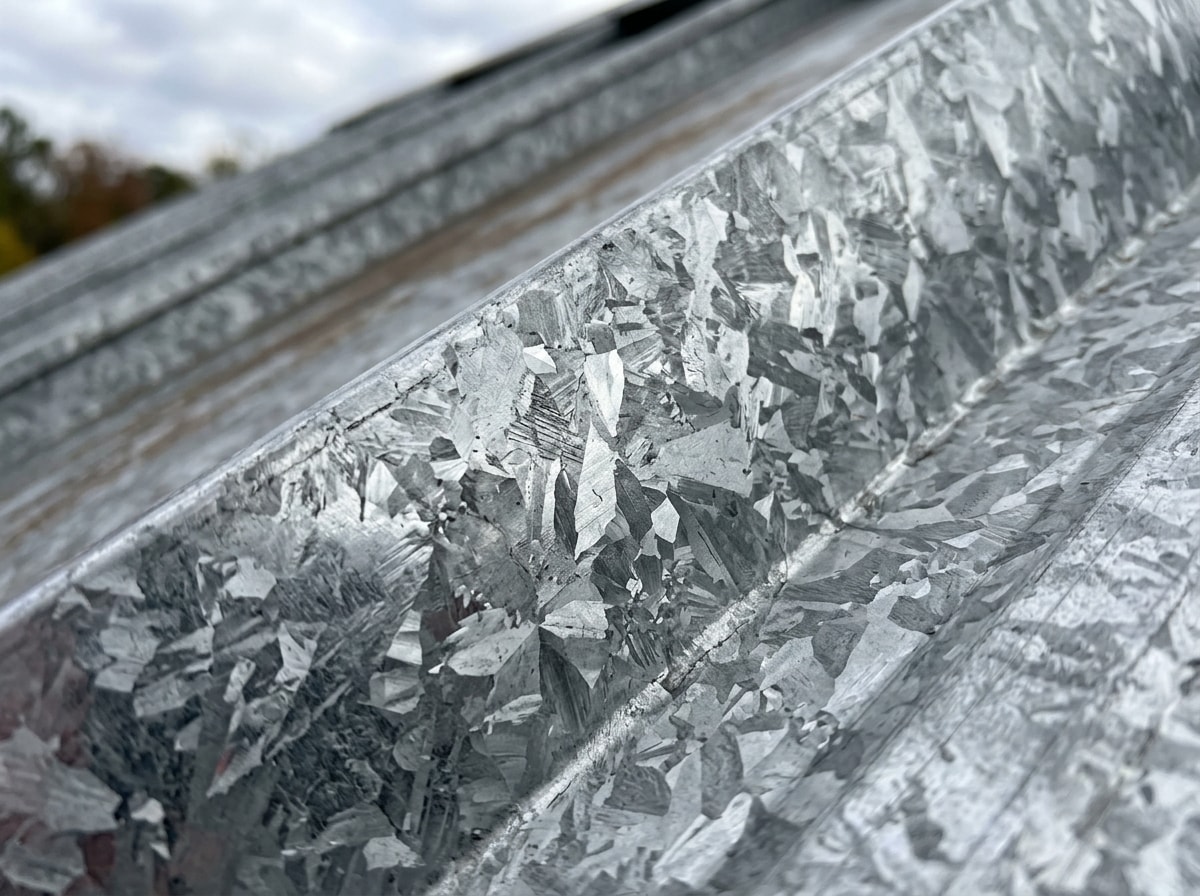
On the rust question specifically: Galvalume's coating self-heals small scratches through a sacrificial zinc reaction, similar to galvanized steel but with longer-term durability. Missouri lake humidity and morning fog are moisture-heavy but low in dissolved salt, which is a meaningfully easier environment than the coastal salt spray most national Galvalume guides warn about. In our own inspections around Camdenton and Four Seasons, the panels that showed premature wear weren't failing from lake humidity. They were cut edges left unsealed against copper flashing or set directly on pressure-treated dock lumber, both of which trigger galvanic corrosion regardless of how close the roof sits to water.
That last point matters more than most buying guides mention: keep Galvalume away from direct contact with copper, lead, or treated lumber. Those combinations create a galvanic cell that corrodes the coating far faster than open-air lake exposure ever would.
Best Panel Profiles for Lake of the Ozarks Properties
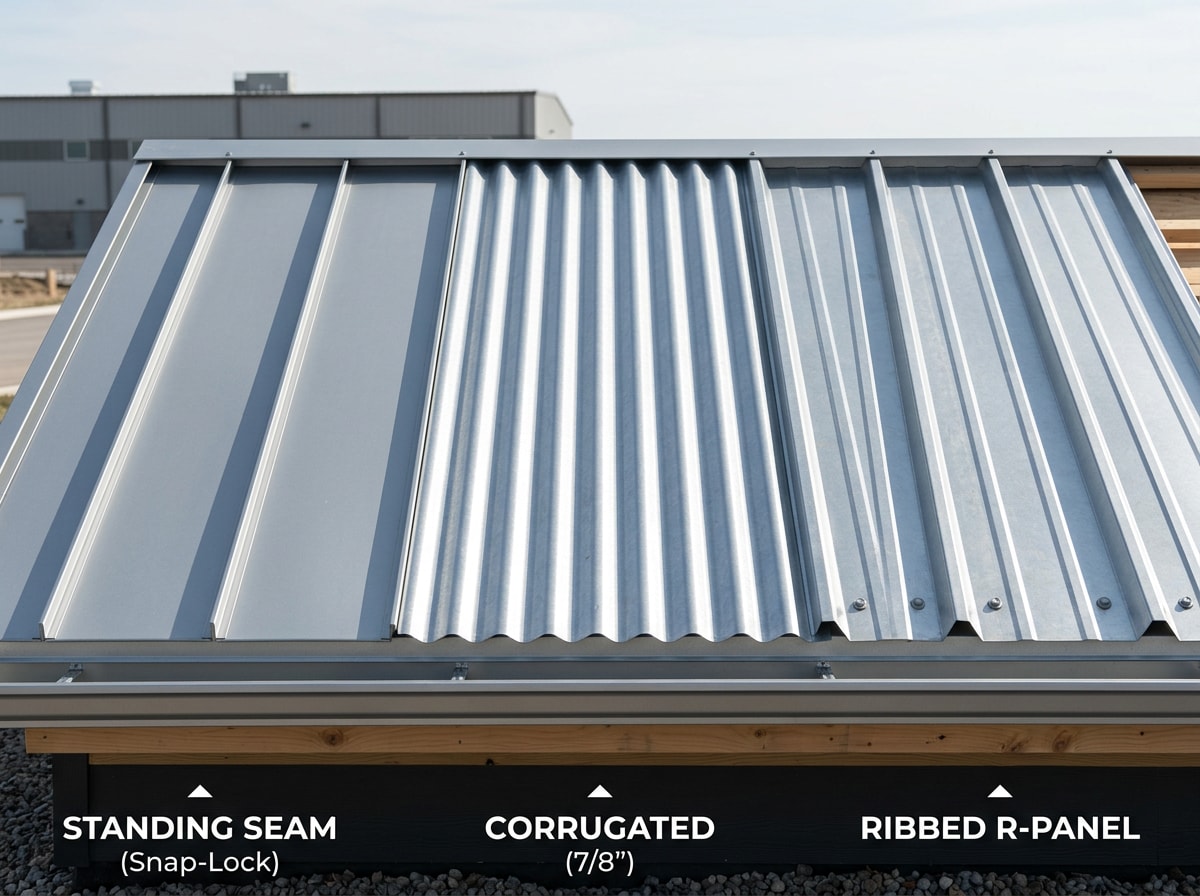
Lake homeowners typically choose between three panel styles, and the right one depends on what's being covered.
Standing Seam, Corrugated & Ribbed Options
Standing seam uses concealed fasteners and raised seams, giving lakefront homes a clean, premium look plus strong water-shedding performance on low-slope sections near docks and boathouses.
Corrugated panels are the budget-friendly choice for sheds, boathouses, and dock structures, where cost matters more than appearance.
Ribbed panel roofing sits in between — versatile and economical, and common on commercial buildings and outbuildings around the lake.
Regional suppliers typically stock 24-gauge or 26-gauge Galvalume, with 24-gauge preferred where wind exposure is higher along open shoreline. Finish options range from unpainted Galvalume to painted PVDF (Kynar) coatings in a wide range of colors.
See the full lineup of installation options on our roofing contractor services page, or go straight to roof replacement if you already know metal is the direction you want.
Galvalume vs. Galvanized Steel vs. Aluminum
| Material | Coating | Typical Lifespan | Best Use |
|---|---|---|---|
| Galvalume | Aluminum-zinc-silicon | 40–60 years | Most residential/commercial roofs |
| Galvanized | Zinc only | 20–30 years | Livestock buildings, ammonia exposure |
| Aluminum | Solid metal, no coating | 50+ years | True coastal, high-salt environments |
Galvalume generally outperforms galvanized steel in corrosion resistance and overall lifespan in inland, non-coastal settings like the lake. Galvanized still wins in one specific scenario: barns and buildings with livestock, where ammonia fumes degrade Galvalume's coating faster than they degrade plain zinc. Solid aluminum costs more and makes the most sense in true coastal settings with heavy salt spray, not at an inland Missouri reservoir.
Installation, Fasteners, and Maintenance
Standing seam Galvalume requires specialized seaming tools and trained crews, making it a poor DIY candidate. Corrugated and ribbed panels are more forgiving to install but still benefit from a professional crew that knows proper fastener spacing and flashing details.
Crews working at height on any roof pitch should follow federal fall-protection rules. OSHA's fall protection standard requires protection once a worker is six feet or more above a lower level on an unprotected roof edge, a threshold that applies to both low-slope and steep-slope metal roofing work.
Pick the right underlayment before panels ever go down. Our metal roofing underlayment guide breaks down synthetic versus felt options and ice-dam protection for 2026 installs, which matters as much to long-term performance as the panel coating itself.
Painted Galvalume panels in lighter colors can also qualify for reduced cooling loads. The U.S. Department of Energy's cool roof guidance notes that reflective roof products are evaluated on solar reflectance and thermal emittance, both of which affect summer attic temperatures in a lake home that sits in direct sun most of the day.
Metal roof maintenance is otherwise minimal. An annual check for loose fasteners, debris buildup, and worn sealant at penetrations usually covers it, and a roof maintenance program catches those small issues before they turn into leaks.
Serving Lake of the Ozarks and Surrounding Communities
Lake of the Ozarks roofing projects stretch across Osage Beach, Camdenton, Sunrise Beach, Laurie, Linn Creek, and Four Seasons. Whether it's a lakefront home or a dock outbuilding, a crew familiar with the area's humidity and wind patterns is worth seeking out over a generalist from out of the region.
Roof Direct Midwest covers the full Lake of the Ozarks, MO area, and a roof inspection is the fastest way to find out whether your existing roof deck can take a Galvalume system as-is or needs repair first.
This guide was reviewed by Derek Lane, Lead Project Estimator at Roof Direct Midwest, who has spent 14 years estimating and overseeing standing seam and exposed-fastener metal roof installs across central Missouri, including multiple Lake of the Ozarks shoreline properties. Questions about your specific roof? Contact us for a free, no-pressure estimate.
FAQ
What Is a Galvalume Roof?
A Galvalume roof is steel sheet coated with an aluminum-zinc-silicon alloy under ASTM A792. It combines aluminum's corrosion resistance with the strength and affordability of steel, and it's the default substrate under most metal roofing sold today.
Is Galvalume the Same as Galvanized Steel?
No. Galvanized steel uses a zinc-only coating. Galvalume uses an aluminum-zinc-silicon alloy, which generally lasts longer and resists corrosion better in most inland environments, though galvanized is still preferred for livestock buildings.
How Long Does a Galvalume Roof Last?
Bare Galvalume is commonly rated for 40 to 60 years of service life in non-coastal environments. Painted panel finish warranties typically run 25 to 40 years, which covers fading and chalking rather than the structural coating itself.
Will a Galvalume Roof Rust?
Galvalume resists rust through a self-healing aluminum-zinc coating at cut edges and minor scratches. It can still corrode faster than normal if installed in direct contact with copper, lead, or pressure-treated lumber, so flashing details matter as much as the panel itself.
How Much Does a Galvalume Roof Cost Per Square Foot in 2026?
Installed cost runs roughly $6 to $20 per square foot depending on panel profile, with corrugated and exposed-fastener panels at the low end and mechanical-lock standing seam at the high end. Roof complexity, pitch, and trim package move the number within that range.
What's the Best Roofing Material for a Lake House?
Standing seam Galvalume is widely considered a strong choice for lake houses because it resists the humidity and algae growth that break down asphalt shingles faster near open water, without the coastal salt-spray limitations that push true coastal properties toward solid aluminum.