New roofing in Omaha, NE has to survive hail, straight-line winds over 70 mph, and sharp freeze-thaw swings, sometimes within the same week. That combination wears out a roof faster than it would in most other states, which is why material choice and contractor vetting carry more weight here than almost anywhere in the Midwest. Here's what actually drives cost, lifespan, and performance for a 2026 Omaha roof replacement.
Why Omaha's Weather Demands a Tougher Roof
Omaha sits on the eastern edge of the Great Plains, where warm Gulf moisture collides with dry air moving in from the Rockies, a setup that regularly spins up damaging supercells. The National Weather Service's Omaha/Valley forecast office has documented just how extreme that can get: in April 2022, Omaha, Norfolk, and Lincoln all observed one of their windiest months on record, observing monthly average wind speeds not seen since the 70s and 80s . That same year, a storm in the office's coverage area produced a 5-inch hailstone report that was the largest ever transmitted by the Omaha/Valley office via a Local Storm Report .
That severity is now showing up in insurance math, not just storm reports. In 2024 in Nebraska, home insurance providers paid out $1.36 in claims for every dollar collected in premiums, continuing a recent run of frequent annual losses . Roofs are a direct driver of that number. A new roof here isn't just a cosmetic upgrade, it's the component that determines whether your next hailstorm is a non-event or a five-figure claim.
Our crews work the entire Omaha metro and see this pattern every storm season: the roofs that hold up are the ones specified for Nebraska's weather from the start, not retrofitted after the fact.
Signs Your Roof Needs Replacing, Not Just a Patch
A roof rarely fails all at once. It usually sends warning signs for months before a leak shows up inside the house. Watch for:
- Granules collecting in gutters or at downspout exits
- Shingles that curl, cup, or claw at the edges
- Cracked, split, or missing shingles after a wind event
- Dark streaking or algae patches across the slope
- Sagging rooflines or soft spots underfoot
- Ceiling stains or attic moisture after rain
Any single item on that list might be minor. Three or four together usually mean the roof is past the point where patching makes sense.
Here's a real-world example: a 20-year-old architectural shingle roof shedding visible granules into the gutters is typically near the end of its service life, even if it looks fine from the curb. Granule loss exposes the asphalt mat underneath, and at that age, a patch rarely holds through the next hail season. If you're not sure which category your roof falls into, a free roof inspection settles the question in under an hour.
Repair vs. Full Replacement: How to Decide
Once warning signs show up, the next call is whether a repair will actually hold or whether replacement is the smarter long-term move.
Repair makes sense when:
- Damage is isolated to one slope or a small section
- The roof still has most of its expected lifespan left
- A reasonable shingle match is available for the patch
Replacement makes sense when:
- Damage is spread across multiple slopes
- The roof is already near or past its rated lifespan
- Leaks keep reappearing in new spots after each repair
Patching a roof that's already failing in multiple places usually costs more over three years than replacing it once. If you're weighing the two, our residential roof repair and roof replacement pages walk through what each scope of work actually includes.
Best Roofing Materials for Omaha Homes in 2026
Any material under serious consideration here needs to handle hail impact, high wind uplift, and repeated freeze-thaw cycling without breaking down early.
Class 4 Impact-Resistant Shingles
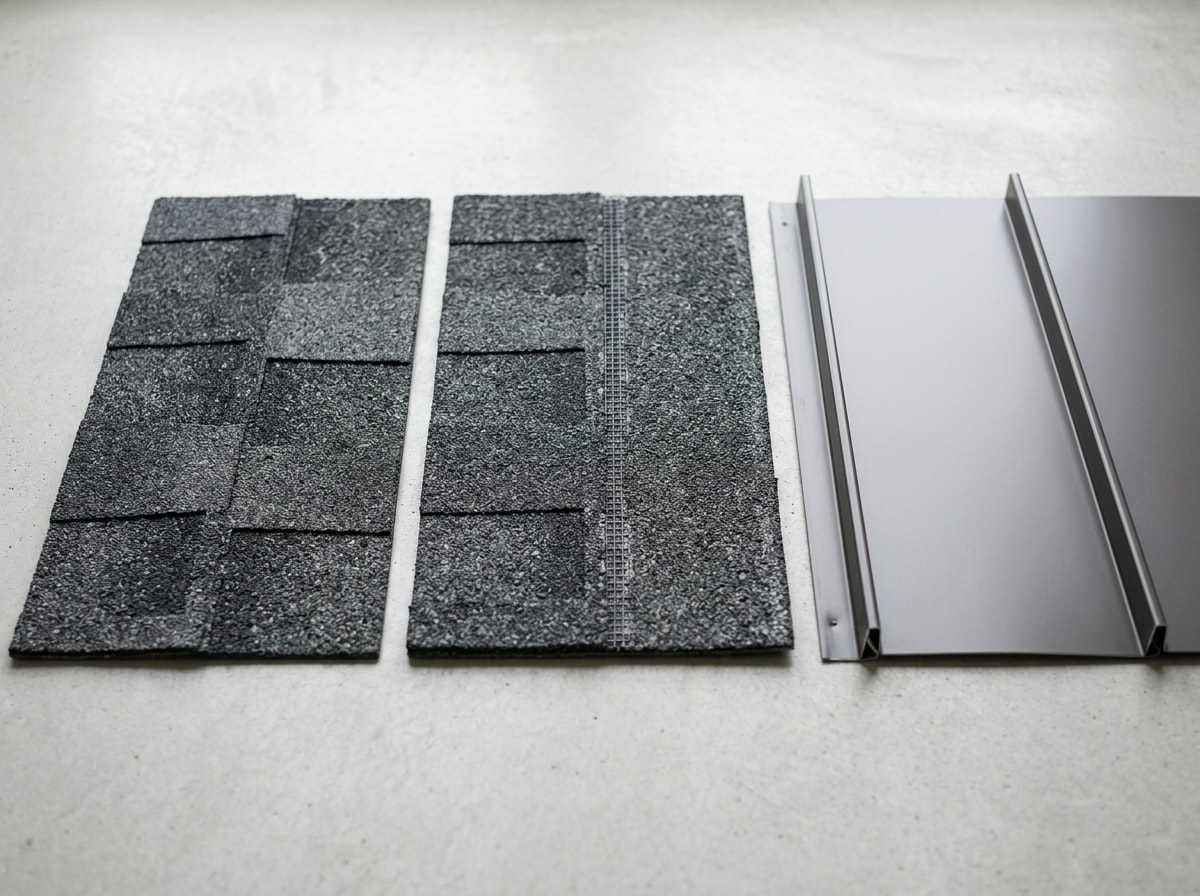
Class 4 is the highest rating under the UL 2218 steel-ball drop test. Class 4 shingles withstand the impact of a 2 inch steel ball dropped from a height of 20 feet , and some homeowners insurance may offer premium discounts for homes with Class 4 shingles . For a metro that averages multiple one-inch-plus hail events a season, that discount can offset a meaningful share of the material upgrade over time.
Standing Seam Metal Roofing
Metal systems run 40 to 70 years with strong resistance to both hail denting and wind uplift, making them the default choice for homeowners planning to stay put long-term. We cover the full cost and lifespan breakdown for this material in our Midwest Region material guide.
Underlayment and Ice & Water Shield
What's under the shingles matters almost as much as the shingles themselves. Synthetic underlayment paired with ice-and-water shield at eaves, valleys, and penetrations is what actually stops wind-driven rain and ice dams from reaching the deck, even when the shingle layer takes a hit.
2026 New Roof Cost in Omaha, NE
Roofing is priced by the "square," a unit equal to 100 square feet of roof surface. Most Omaha homes run 20 to 30 squares once pitch, dormers, and overhangs are factored in, well above the home's living-area square footage.
Across current Omaha-area cost data, a typical asphalt shingle roof replacement lands in the $11,600 to $20,000 range for a 2,000 to 2,300-square-foot home, with per-square-foot pricing on composition shingles generally running $4 to $8 installed depending on quality tier and roof complexity. Upgrading to Class 4 impact-resistant shingles or metal pushes the number higher but reduces storm-related repair frequency over the life of the roof.
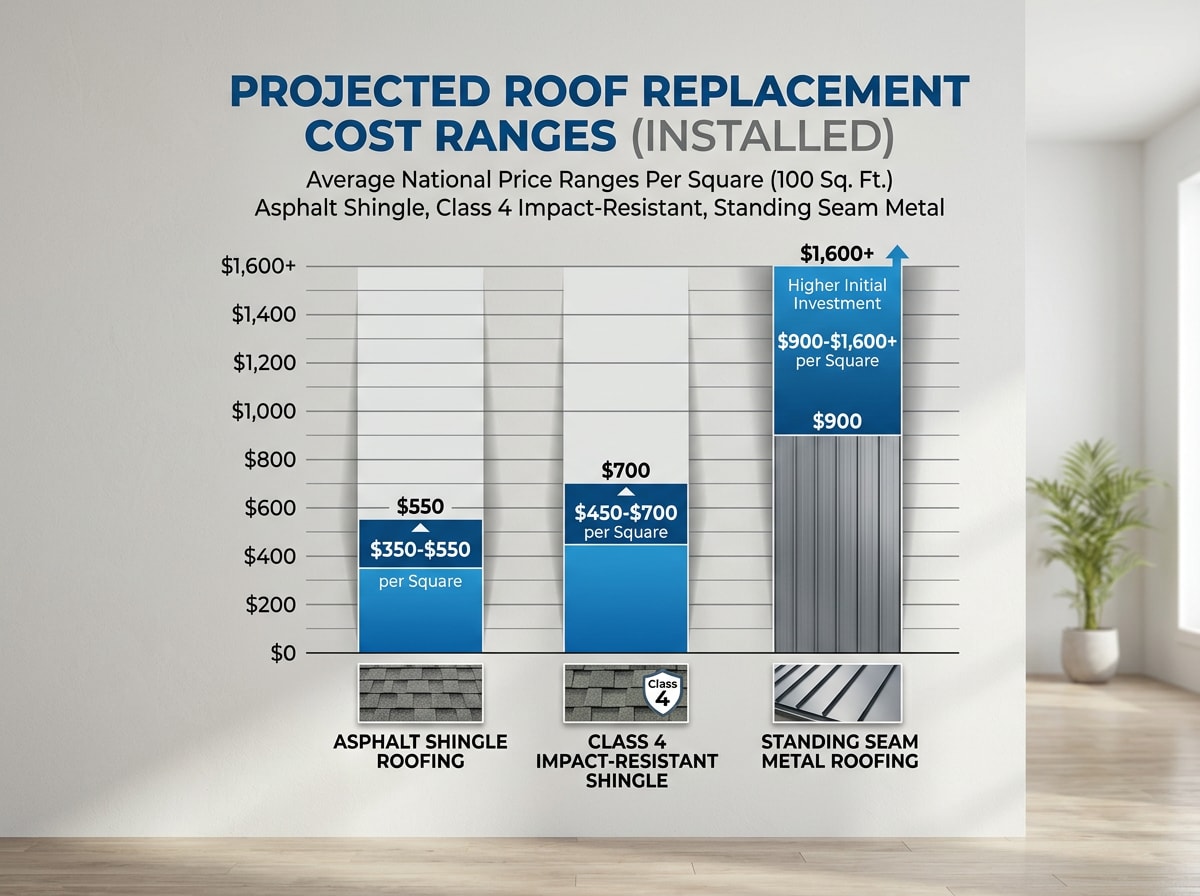
| Material | Cost per Sq. Ft. Installed | Typical Lifespan | Best For |
|---|---|---|---|
| Architectural asphalt shingles | $4.25 – $8.50 | 20–30 years | Budget-conscious replacements with proven performance |
| Class 4 impact-resistant shingles | $10 – $15 | 25–30 years | Hail-prone neighborhoods, possible insurance discount |
| Standing seam metal | $9 – $16 | 40–70 years | Long-term owners wanting maximum durability |
| TPO / flat roofing | $5.50 – $12 | 20–30 years | Additions, porch roofs, low-slope sections |
Ask any contractor to break their quote down by square before you compare bids. A number that looks low per job can hide a high per-square rate on a smaller roof, and vice versa. Ready to see where your home lands? Get a free estimate and we'll measure and price it in writing.
How to Choose a Roofing Company in Omaha
Omaha's weather punishes shortcuts. Use these eight checks before signing anything:
- Ask neighbors first. Reviews from people whose roofs survived the same storms you did are more reliable than generic star ratings.
- Confirm local tenure. A contractor who's worked through multiple Omaha hail seasons knows which materials actually hold up here.
- Request references and project photos. A company confident in its work shares both without hesitation. Our completed projects page is a good benchmark for what finished local work should look like.
- Verify licensing and insurance. Ask for proof of liability coverage and workers' comp before any crew sets foot on your roof.
- Get a written, itemized proposal. It should specify material, scope, start and completion dates, and payment terms.
- Check for a permanent address and phone number. The
contractor should have a phone number, tax identification number and business license where required , per National Roofing Contractors Association guidance.
- Compare three bids, not five. Fewer makes it hard to judge fairness; too many just delays the decision.
- Watch for storm-chaser pressure tactics. Door-to-door crews pushing same-day contracts after a hailstorm are a red flag, not a deal.
If you'd rather start with a conversation than a checklist, our roofing contractor team is happy to walk through your specific roof before you commit to anyone.
FAQ
How long does a roof replacement take in Omaha?
Most residential tear-offs and installs take 1 to 3 days once the crew starts. The full timeline, including inspection, estimate, material ordering, and permitting, can stretch several weeks depending on weather and roof complexity.
What is the best roofing material for Nebraska?
There's no single best option, but the strongest performers all share impact and wind resistance: Class 4 impact-rated asphalt shingles, high-wind-rated shingle lines, and standing seam metal. The right choice depends on your budget and how long you plan to stay in the home.
How do I identify a legitimate roofing contractor?
Look for active state licensing, current liability insurance, a verifiable local address, and a written workmanship warranty. The contractor should readily offer client references and a list of completed projects, and you can call these clients to ask whether they were satisfied with the work .
Will filing a roof insurance claim raise my premium?
It depends on your carrier, your claim history, and state regulations, so there's no universal answer. Given that insurance providers paid out $1.36 in claims for every dollar collected in premiums statewide in 2024, rates are climbing across the board regardless of individual claims. Ask your agent directly before filing, and loop in your contractor to document damage thoroughly either way.
What are the first signs I need a new roof instead of a repair?
Granule loss in the gutters, curling or cracked shingles, sagging rooflines, and ceiling stains after rain are the clearest signs. If two or more show up at once, a replacement is usually more cost-effective than another round of patches. A roof inspection can confirm it in person.
Ready to stop guessing and get a written number? Contact Roof Direct Midwest for a free estimate, or start at our homepage to see the full range of services we bring to every Omaha roof.